
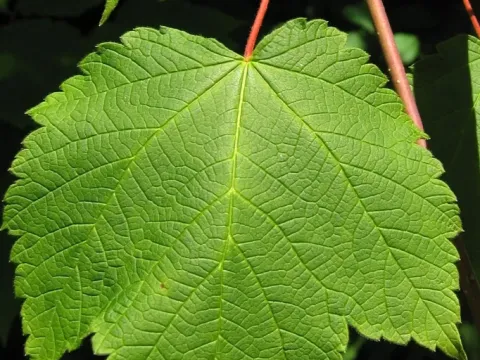
Mountain maple
Acer spicatum
The mountain maple (Acer spicatum) is a deciduous shrub or small tree belonging to the Sapindaceae family. It is native to the eastern parts of North America, typically found in cool, moist forest understories and along rocky slopes or streams.
What the section contains
Mountain maple
The species thrives in cool temperate climates and exhibits remarkable winter hardiness. It is well-adapted to regions with severe cold, making it an excellent choice for ornamental landscaping in northern latitudes where other maple species might struggle to survive.
Regarding soil requirements, this plant prefers well-drained, fertile, and slightly acidic soils rich in organic matter. It is sensitive to waterlogged conditions, so ensuring proper drainage at the planting site is essential for long-term health and growth vigor.
Mountain maple is highly shade-tolerant, which makes it ideal for planting in the understory of larger trees or in areas with limited direct sunlight. While it can tolerate some sun in cool northern regions, it generally performs best when protected from harsh afternoon heat.
Cultivation practices should focus on maintaining consistent soil moisture, especially during the first few years after planting. Applying organic mulch around the base helps regulate soil temperature and provides essential nutrients as it decomposes over time.
Verticillium wilt is one of the most serious fungal diseases affecting Acer spicatum, often leading to canopy dieback. There is no chemical cure for this disease, so maintaining tree vigor through proper fertilization and stress avoidance is the primary prevention strategy.
Pests such as scale insects, mites, and leaf rollers can damage the foliage and stems. Integrated pest management, including the use of horticultural oils and attracting beneficial insects to the garden, is recommended to control these populations without harming the ecosystem.
Powdery mildew may manifest as a white powdery coating on leaves during humid summer conditions. Improving air circulation within the shrub's canopy and avoiding overhead watering can significantly reduce the incidence of this fungal issue.
Leaf spots, caused by various fungi, can be unsightly but rarely pose a fatal threat to healthy, mature trees. Collecting and disposing of infected fallen leaves in autumn is a critical sanitation practice to minimize the fungal spore load for the following season.
Physical damage to the bark by rodents or lawn maintenance equipment can create entry points for pathogens. Protecting the trunk with suitable guards and maintaining a mulch-free zone directly around the stem helps prevent such injuries and ensures better tree health.