
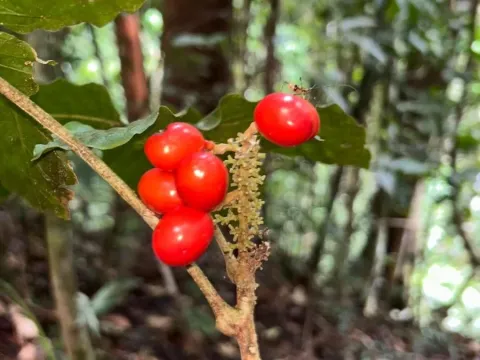
Lepisanthes
Lepisanthes
Lepisanthes is a genus of evergreen trees and shrubs belonging to the Sapindaceae family. Their natural distribution range encompasses the humid tropical forests of Southeast Asia, specifically across India, Malaysia, and Indonesia.
What the section contains
 Lepisanthes alata
Lepisanthes alata
Lepisanthes alata
 Lepisanthes amoena
Lepisanthes browniana
Lepisanthes browniana
Lepisanthes amoena
Lepisanthes amoena
Lepisanthes browniana
Lepisanthes browniana
 Lepisanthes erecta
Lepisanthes erecta
Lepisanthes erecta
 Lepisanthes fruticosa
Lepisanthes fruticosa
Lepisanthes fruticosa
 Lepisanthes rubiginosa
Lepisanthes rubiginosa
Lepisanthes rubiginosa
 Lepisanthes senegalensis
Lepisanthes senegalensis
Lepisanthes senegalensis
 Lepisanthes tetraphylla
Lepisanthes tetraphylla
Lepisanthes tetraphylla
Lepisanthes
The plant has specific climatic requirements, favoring consistently high temperatures and high air humidity. It is extremely sensitive to frost and cannot withstand even short periods of cold, which restricts its cultivation strictly to tropical regions.
The crop develops successfully in well-drained, fertile loams rich in organic matter. An essential condition for healthy growth is protection from strong winds and access to regular irrigation during periods of low rainfall.
Botanically, Lepisanthes is characterized by pinnate leaves and small flowers arranged in inflorescences. The fruits are fleshy drupes, and many species produce edible, flavorful berries that are appreciated by local populations.
From a horticultural perspective, Lepisanthes is considered a promising fruit crop for tropical gardens. In addition to its culinary uses, certain species are valued in traditional medicine and landscape architecture within suitable climates.
Common threats to Lepisanthes include various fungal infections, which typically develop under conditions of poor soil drainage or inadequate air circulation within the canopy. Regular sanitary pruning is recommended to mitigate the risks of disease spread.
Pests such as mealybugs and spider mites may damage foliage and young shoots, especially in dense nursery settings. An integrated pest management approach, focusing primarily on preventative maintenance, is essential for healthy plant development.