
Lepisanthes fruticosa
Lepisanthes fruticosa
Description
Growing requirements
Lepisanthes fruticosa is a perennial shrub belonging to the Sapindaceae family. It is typically found in the tropical regions of Southeast Asia, thriving in the dense, moist understory of native forests.
The plant exhibits a shrubby habit, often growing as a multi-stemmed tree that can reach heights of up to five meters. Its foliage is evergreen, providing constant cover throughout the year in its native climate.
It requires a tropical climate with consistent temperatures and high relative humidity. It is not cold-hardy and will suffer significant damage if exposed to temperatures approaching freezing points.
The soil should be fertile, deep, and well-drained. While the plant appreciates moisture, it does not tolerate waterlogged soil, which can quickly lead to root rot and other fungal pathologies.
Cultural care involves maintaining adequate soil moisture and providing partial shade, especially for younger plants. Proper mulching can help maintain root temperature and soil moisture levels during dry spells.
Harvesting
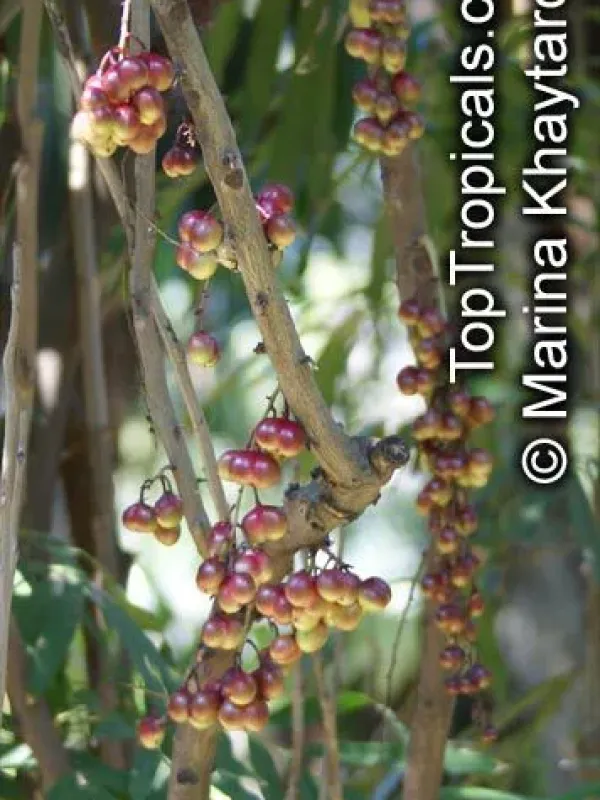
The fruit of Lepisanthes fruticosa is a small, succulent drupe that turns vibrant red or dark purple when fully mature. These fruits are typically borne in clusters along the branches.
Harvesting is performed manually once the fruit reaches the optimal stage of ripeness. Careful handling is necessary to ensure the skin remains intact for better quality retention.
The primary economic use is as a local food source. The fruit is consumed fresh or processed into traditional preserves, contributing to the dietary diversity of local communities.
Post-harvest handling is critical because the fruits are perishable. Immediate consumption or local processing is the standard practice for managing the yield effectively.
In addition to food production, various extracts from the plant are studied for their potential bio-active properties, making it an interesting subject for both botany and horticulture enthusiasts.