
Lepisanthes amoena
Lepisanthes amoena
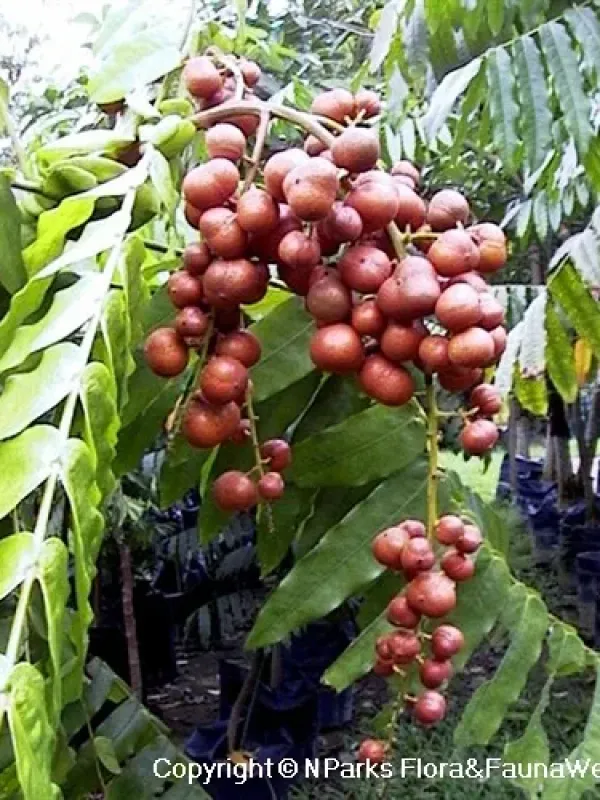
Description
Growing requirements
Lepisanthes amoena is a notable evergreen woody plant belonging to the Sapindaceae family. Native to the humid rainforests of Southeast Asia, this species typically thrives in the understory layer, where it benefits from the protection and humidity provided by the forest canopy.
The cultivation of this plant requires a strict tropical climate, characterized by high temperatures and consistent rainfall throughout the year. It does not tolerate frost or cold drafts, making it strictly suitable for equatorial and tropical greenhouse conditions in non-native regions.
Soil requirements focus on deep, well-draining substrates enriched with organic matter. Like many plants of the Sapindaceae family, it prefers slightly acidic to neutral soil conditions, which support healthy root development and efficient nutrient uptake.
Agrotechnical practices involve maintaining soil moisture through regular mulching and providing adequate shade for saplings. Propagating the plant is best achieved via fresh seeds, as they possess short viability and must be sown immediately after collection from the mother tree.
Beyond its culinary value, where its fruits are consumed locally, Lepisanthes amoena holds interest for botanical collectors and tropical agroforestry. The tree contributes to biodiversity and provides aesthetic value due to its lush, dark-green foliage and clusters of developing fruit.