
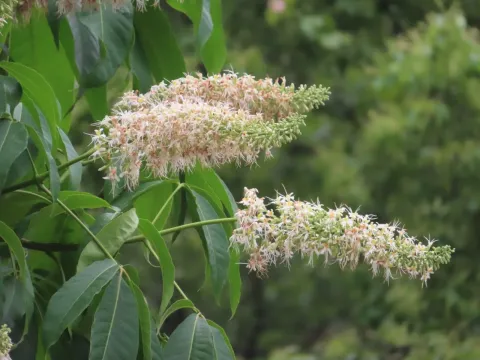
Chinese horse chestnut
Aesculus chinensis
The seeds of Aesculus chinensis require a period of stratification to break dormancy; therefore, sowing in nurseries is typically performed in late autumn for natural winter chilling.
What the section contains
Chinese horse chestnut
Freshness is critical for successful germination, as these seeds quickly lose viability if allowed to dry out or if stored at improper temperatures for too long.
For greenhouse cultivation, seeds can be planted in containers in early spring, provided they have been stored in a moist medium at low temperatures during the preceding months.
Sowing depth should be approximately 5 to 8 centimeters in open ground to protect the seeds from desiccation, birds, and rodents.
When establishing plantations, a spacing of at least 4–6 meters is recommended to allow the trees enough space for crown development and to prevent overcrowding in future years.
Chinese horse chestnut is a deciduous tree belonging to the Sapindaceae family, native to China, often prized for its large, attractive panicles of flowers during the blooming season.
The species thrives in deep, fertile, and well-drained soils, preferring high humus content to support its rapid growth rate and development during the early life stages.
Climatically, it prefers temperate and subtropical regions with moderate rainfall, as it is sensitive to severe, prolonged droughts which can scorch the foliage.
It performs best in locations that are sheltered from harsh winds, as the large leaves can be easily damaged, and it requires significant light to bloom effectively.
- Soil: Moist, deep loams, or rich alluvial soils.
- Moisture: Consistent watering is needed during the establishment phase and hot summer months.
- Aspect: Prefers full sun or partial shade in hotter climates to prevent leaf scorch.
This species is primarily valued as an ornamental tree in landscaping, commonly planted in parks and gardens for its shade and aesthetic, architectural form.
The fruit, although not typically consumed as food due to saponin content, contains compounds with pharmacological interest for cosmetic and vein-health products.
The timber is soft and lightweight, making it suitable for small-scale woodcraft, carving, and indoor furniture components where durability is not the primary requirement.
As a melliferous plant, it plays a role in local ecosystems by providing a source of nectar for pollinators, which helps support the biodiversity of the area.
In environmental forestry, the tree is utilized for soil stabilization and slope protection, contributing to the prevention of erosion in hilly or unstable terrain.
The horse chestnut leaf miner represents a significant pest threat, which causes severe leaf browning and potentially weakens the tree over successive seasons of infestation.
Fungal diseases, such as leaf blotch and anthracnose, are common in humid conditions and can result in premature leaf drop if not managed with proper air circulation.
Bleeding canker, caused by bacterial infection, can lead to localized bark necrosis and structural damage to the branches or main trunk if left untreated.
Root-feeding larvae, such as those of the cockchafer beetle, are known to target young saplings, often causing high mortality rates in newly planted nursery stock.
Effective management includes maintaining tree vigor through appropriate fertilization, clearing away infected leaf litter in autumn, and implementing targeted chemical control when necessary.