
Nephelium costatum
Nephelium costatum
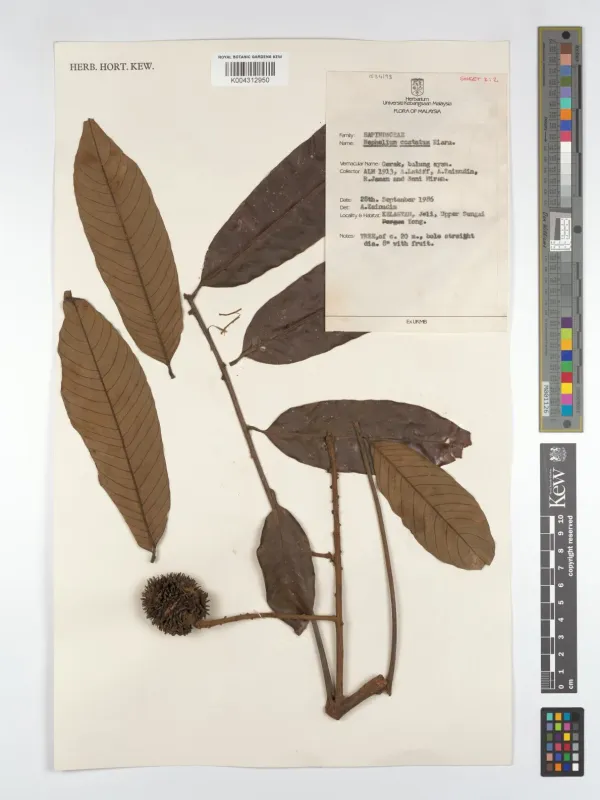
Description
Growing requirements
Nephelium costatum is a member of the Sapindaceae family, characterized by its evergreen foliage and tropical growth habits. It naturally thrives in the dense, humid rainforests of Southeast Asia.
The plant is highly sensitive to climatic fluctuations and requires a consistent tropical environment. It performs best in areas with high annual rainfall and minimal temperature variance throughout the year.
Optimal soil conditions include fertile, well-draining substrates rich in organic matter. Waterlogged soil can severely damage the root system, making site selection a critical factor for cultivation success.
Agricultural management involves careful irrigation planning to maintain soil moisture without causing saturation. Mulching is recommended to stabilize soil temperature and retain humidity around the roots.
Economically, the species is valued for its edible fruits, which contribute to local food security in its native range. Ongoing studies explore its potential for larger-scale commercial cultivation in similar tropical climates.
Main diseases and pests
Fruit flies constitute the primary pest threat to Nephelium costatum, often causing significant loss of marketable yields. Integrated pest management strategies are necessary to protect the maturing fruit from infestation.
Powdery mildew is a prevalent fungal issue, especially in environments with high humidity and stagnant air. Proper canopy management through regular pruning is essential to improve airflow and reduce fungal prevalence.
Root-knot nematodes can impede growth in young saplings, often leading to reduced nutrient uptake and stunted development. Ensuring the use of sterile, high-quality soil media in nurseries is a key preventative measure.
Defoliating insects can pose a challenge to younger plants, particularly in nursery settings. Biological control measures are often preferred to manage these populations without disrupting the orchard ecosystem.
Anthracnose may affect both fruit and foliage during periods of prolonged rainfall. Maintaining clean cultural practices, such as removing fallen debris, is crucial for mitigating the risk of pathogen spread.