
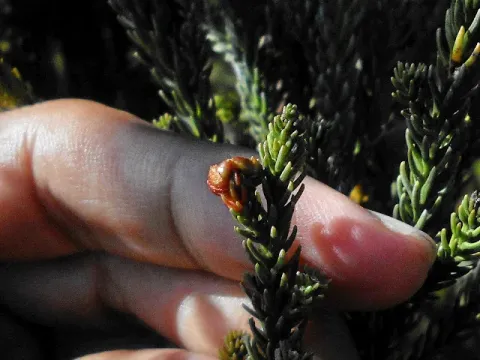
Dacrydium
Dacrydium
Dacrydium is a genus of evergreen coniferous trees belonging to the Podocarpaceae family. Naturally distributed across the rainforests of Southeast Asia, New Zealand, and the Pacific Islands, these trees are prized for their elegant foliage and architectural structure.
What the section contains
 Dacrydium araucarioides
Dacrydium araucarioides
Dacrydium araucarioides
 Dacrydium balansae
Dacrydium balansae
Dacrydium balansae
 Dacrydium beccarii
Dacrydium beccarii
Dacrydium beccarii
 Dacrydium elatum
Dacrydium elatum
Dacrydium elatum
 Dacrydium fonkii
Dacrydium fonkii
Dacrydium fonkii
 Dacrydium gibbsiae
Dacrydium gibbsiae
Dacrydium gibbsiae
 Dacrydium lycopodioides
Dacrydium nidulum
Dacrydium nidulum
Dacrydium novoguineense
Dacrydium novoguineense
Dacrydium lycopodioides
Dacrydium lycopodioides
Dacrydium nidulum
Dacrydium nidulum
Dacrydium novoguineense
Dacrydium novoguineense
 Dacrydium pectinatum
Dacrydium pectinatum
Dacrydium pectinatum
 Dacrydium xanthandrum
Dacrydium xanthandrum
Dacrydium xanthandrum
Dacrydium
For successful cultivation, Dacrydium requires soil with excellent drainage and a slightly acidic pH. The root system is sensitive to waterlogging, so soil structure must allow for consistent moisture without compaction or stagnation.
Climate is the primary factor limiting the range of Dacrydium. These trees thrive in humid, subtropical, or temperate maritime environments. They are generally not frost-tolerant and require protection from harsh winds and extreme temperature fluctuations.
In nursery settings, young plants benefit from dappled shade, which prevents needle scorch. As they mature, they require stable moisture levels and protection from drought, which can significantly stunt their slow annual growth rate.
The morphology of the genus is unique within the conifers, characterized by scale-like or needle-like leaves and seeds often borne on fleshy receptacles, illustrating their evolutionary distinction within the gymnosperms.
The timber of Dacrydium has historically been highly valued for its durability, fine grain, and resistance to decay. It has been used in premium furniture making and construction, though modern forestry emphasizes sustainable management due to the tree's slow growth.
In ornamental horticulture, the harvest or extraction process involves careful root-balling for transplanting. Success depends on maintaining the integrity of the delicate root system, which does not easily recover from heavy mechanical disturbance.
Seed collection requires monitoring for maturity, as the fruit-like structures must be harvested at the correct stage to ensure viability. Due to short shelf life, seeds should be processed and sown immediately after ripening.
Sustainable use of this culture is shifting towards nursery-grown ornamental specimens, which are managed for long-term health rather than timber output, making them a significant commodity for high-end landscape architecture.
Efficient management of these plants involves systematic pruning to maintain form and density, which indirectly supports the plant's overall health and increases its commercial value in the nursery trade.
Dacrydium is primarily susceptible to root rot pathogens, particularly in environments with poor soil aeration. These fungi can rapidly deteriorate the health of mature trees if moisture levels are not strictly controlled.
Pests such as scale insects and spider mites frequently target the foliage in glasshouse or indoor environments. These pests drain sap, causing yellowing and premature leaf drop, which weakens the plant's natural defense mechanisms.
Environmental stressors, including localized droughts or excessive humidity, can render trees more susceptible to opportunistic diseases. Maintaining a balanced microclimate is the most effective preventative strategy against these threats.
Improper fertilization, particularly high nitrogen levels, can lead to tender growth that is more attractive to chewing insects and prone to fungal infection, necessitating a balanced, slow-release nutrient program.
Sanitation practices, such as the removal of dead needles and branch debris from the soil surface, are essential to minimize the risk of pathogen buildup in both intensive nursery and landscape planting scenarios.