
Dacrydium gibbsiae
Dacrydium gibbsiae
Description
Growing requirements
Dacrydium gibbsiae is a distinct evergreen coniferous species belonging to the Podocarpaceae family. It is endemic to the high-altitude regions of Borneo, specifically thriving in the harsh environments of mountain peaks and ridges.
The species requires a climate characterized by constant high humidity and frequent mist. It typically grows at elevations ranging from 1500 to 3000 meters, where the temperatures are consistently cool throughout the year.
Soil requirements for Dacrydium gibbsiae are quite specialized. The tree is adapted to nutrient-poor substrates, including ultramafic soils and peat, which are common in its native habitat. Its ability to tolerate low nutrient availability makes it a survivor in extreme ecological niches.
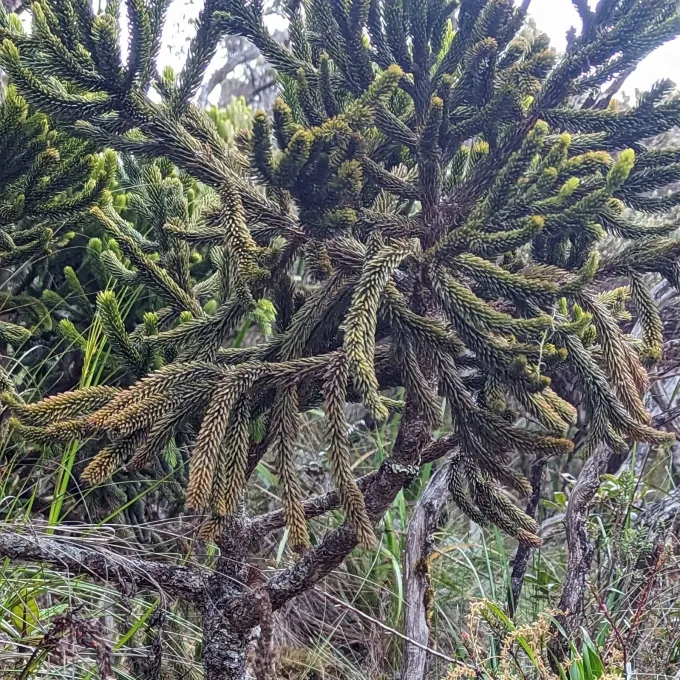
Botanically, the tree is noted for its slow growth rate and dense foliage. The leaves are small, scale-like, and tightly appressed to the stems, an evolutionary adaptation that significantly reduces water loss in windswept and mist-shrouded mountain environments.
In terms of agricultural or commercial use, this species is not suitable for mass cultivation. Its main value lies in its role within the ecosystem and its scientific importance for studying high-altitude plant physiology and adaptation.
Main diseases and pests
Climate change poses a significant threat to the future of Dacrydium gibbsiae. As mountain temperatures rise, the characteristic cloud forest climate that the tree depends on is shifting, threatening the stability of its population.
Wildfires are a major risk factor for this coniferous species. Because the tree grows in regions that are naturally prone to periodic drying, a single fire event can cause long-term, irreversible damage to the population structure.
Habitat loss resulting from human infrastructure development remains a constant concern. Clearing forest land for trails or energy projects impacts the sensitive mycorrhizal fungi in the soil, which the trees need to survive.
Pathogens and pests can exploit trees that are already stressed by environmental changes. Specifically, root rot caused by soil-borne fungi is a common threat when natural drainage patterns are disturbed.
Conservation efforts are currently focused on monitoring these populations and protecting their habitats from encroachment. Understanding the specific biology of Dacrydium gibbsiae is essential for preventing the decline of this rare conifer.