
Dacrydium pectinatum
Dacrydium pectinatum
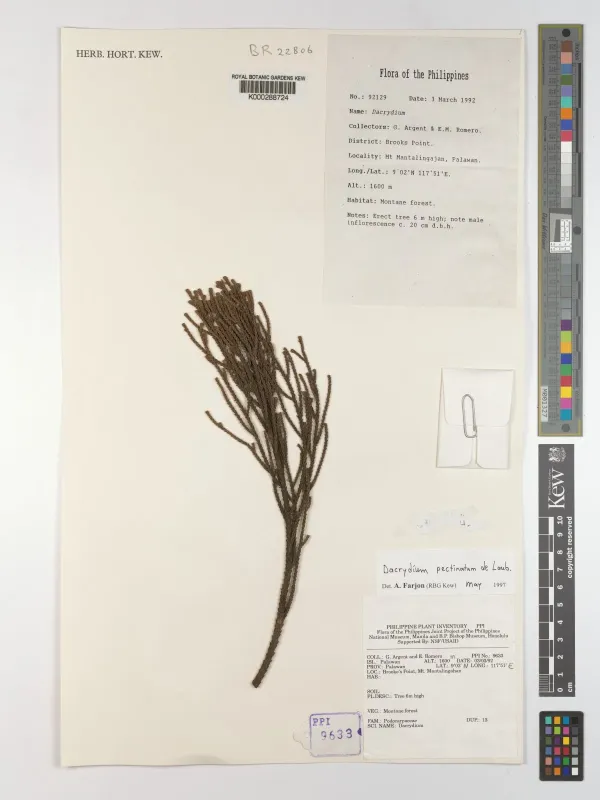
Description
Growing requirements
Dacrydium pectinatum is a significant species belonging to the Podocarpaceae family. It is recognized for its unique, fern-like foliage and slow growth habit, which are typical characteristics for conifers of this botanical group native to tropical regions.
The native distribution of this species covers Southeast Asia, specifically regions including Borneo and the Philippines. It thrives in humid tropical forest environments, often occupying peat swamp forests or nutrient-poor sandy soils where specific moisture levels are maintained throughout the year.
Climate requirements involve high annual rainfall and consistent warm temperatures. The species is highly sensitive to cold stress and dry air, making it suitable for tropical climates or strictly controlled greenhouse environments that emulate its natural ecosystem.
Soil preferences are strictly acidic with high drainage capabilities. Any attempt to cultivate the species must prioritize maintaining a low pH level, as it is biologically adapted to soils where minerals are often leached due to frequent precipitation.
Economic utility focuses on high-quality timber that is resistant to environmental decay. However, due to its conservation status, commercial harvest is strictly regulated, encouraging a shift toward sustainable management practices and ornamental nursery cultivation for botanical research.
Main diseases and pests
The primary threat to the species is habitat destruction, specifically the drainage of wetlands and illegal logging activities. In nursery settings, the plant is susceptible to root rot if soil aeration is insufficient or if irrigation water quality is suboptimal.
Pests such as scale insects or spider mites can infest the foliage, particularly when trees are stressed by poor ventilation. Integrated pest management, focusing on physical sanitation rather than chemical intervention, is recommended to preserve the integrity of the foliage.