
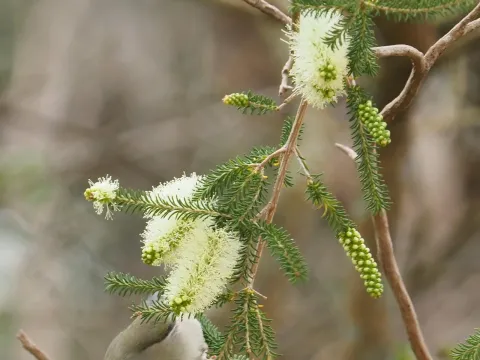
Melaleuca microphylla
Melaleuca microphylla
The sowing of Melaleuca microphylla seeds is carried out in the spring period when soil temperatures reach 20–22 degrees Celsius. The seeds are very small, so they should be sown on the surface of a light, well-drained substrate without being buried deep in the soil.
What the section contains
Melaleuca microphylla
To ensure successful germination, it is necessary to provide high air humidity and a stable temperature regime. It is recommended to cover the seed containers with glass or plastic to create a greenhouse effect until the first shoots appear.
The germination process can last several weeks, so it is important to control moisture and prevent the top layer of soil from drying out. Once two pairs of true leaves have formed, the seedlings should be transplanted into individual pots for further growth.
For vegetative propagation, semi-hardwood cuttings are used, taken in late summer. These cuttings are treated with rooting hormones and placed in a sand-peat mixture to facilitate root development.
Transplanting into open ground to a permanent location should only occur after the risk of frost has passed, as young plants are extremely sensitive to low temperatures.
Melaleuca microphylla belongs to the Myrtaceae family and prefers open, well-lit areas. The plant is photophilic; when deprived of sufficient sunlight, it tends to stretch and lose its naturally dense crown shape.
The culture has moderate soil requirements: it grows successfully in sandy loam or loamy soils with good water permeability. An important factor is soil pH, which should remain within the slightly acidic or neutral range.
The plant has a high water requirement during the active growth phase but reacts negatively to stagnant water in the root zone. Watering should be regular but measured, especially in hot climatic conditions.
In its natural habitat, Melaleuca grows in regions with a mild climate, so for commercial or ornamental cultivation, avoiding prolonged exposure to freezing temperatures is critical.
The plant responds well to the application of complex mineral fertilizers at the beginning of the vegetative season, which promotes intensive development of green mass and prepares the plant for flowering.
The commercial use of Melaleuca microphylla is focused on extracting essential oils that possess high biological activity. The yield of green mass directly depends on planting density and the regularity of sanitary pruning.
Harvesting material for distillation is carried out during the peak flowering phase, when the concentration of volatile compounds in the leaves reaches its maximum. During this time, essential oils have the most balanced chemical composition.
The average productivity of the crop, when grown with proper agronomic practices, allows for stable biomass volumes over many years, as the plant is perennial and recovers quickly after pruning.
Melaleuca essential oil is widely used in the pharmaceutical and cosmetic industries due to its antiseptic and anti-inflammatory properties. The quality of the final product depends on the speed of processing the harvested material.
In ornamental applications, yield is measured not by weight but by the quality of crown formation and the abundance of flowering, which is achieved through skilled management of growth processes.
The main pests for Melaleuca are mealybugs and spider mites, which often attack plants in low-humidity conditions. Leaf damage leads to reduced ornamental value and stresses the plant's overall health.
Fungal diseases, such as root rot, arise when watering regimes are disrupted and soil drainage is poor. Since infections spread quickly, prevention lies in ensuring proper root aeration.
Biological insecticides and acaricides are effective for pest control and are generally less toxic to the environment. Regular inspection of plants allows for the detection of threats at an early stage.
Leaf spot infections may occur during prolonged rainy periods and high humidity, requiring the use of copper-based fungicides. It is important to maintain spacing between plants to improve ventilation.
Weakened plants are most susceptible to disease, so the primary defense is to create optimal growing conditions and provide timely fertilization to boost the plant's natural immunity.