
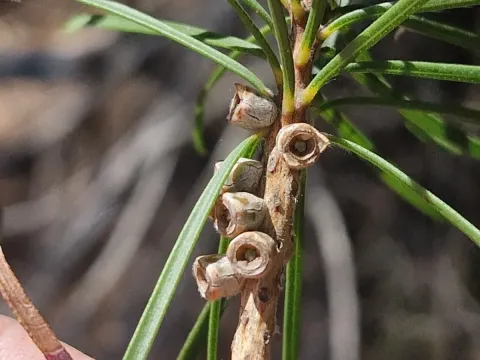
Melaleuca linearis
Melaleuca linearis
Propagation of Melaleuca linearis is primarily achieved through seed sowing or semi-hardwood cuttings. Seeds are extremely fine and should be sown onto the surface of a moist, well-draining potting mix, pressed gently, and left uncovered to receive sufficient light for germination.
What the section contains
Melaleuca linearis
Controlled nursery environments with temperatures between 20°C and 25°C are ideal for successful germination. It is crucial to maintain high humidity around the seeds, using a transparent cover until the seedlings reach a stable size, usually after several weeks.
Cuttings are a more reliable method for vegetative reproduction, ensuring the offspring inherit the parent plant's characteristics. Cuttings should be taken in late spring or early summer, treated with rooting hormones, and placed in a perlite-based substrate.
Young plants should be transplanted outdoors only after the frost season has passed. Initial growth in a sheltered location before moving to the final planting spot helps the plant acclimatize to outdoor environmental conditions.
For container-grown specimens, repotting should occur every one to two years to replenish nutrients. Fresh substrate ensures better aeration and drainage, which are essential for preventing root stress in potted Melaleuca.
Melaleuca linearis, a member of the Myrtaceae family native to Australia, thrives in warm, temperate to tropical climates. It requires full sun exposure to maintain its dense foliage and produce its characteristic linear leaves.
The soil should be well-drained, acidic to neutral, and sandy in texture. Although it can adapt to various soil types, poor drainage is a significant limiting factor that can lead to root diseases and plant decline.
While the plant shows moderate drought tolerance once established, consistent moisture is required during the active growing season. Regular, deep watering is preferred over frequent, shallow wetting to encourage a deep, healthy root system.
Climate protection is essential as this species is not frost-tolerant. In cooler zones, it must be grown in containers and moved indoors or into a greenhouse before the first autumn frost to prevent cold damage to the stems.
Fertilization should be handled with caution, as many Australian natives are sensitive to excessive phosphorus. A balanced, slow-release fertilizer designed for native plants applied during the spring is sufficient for vigorous growth.
Root rot is the most common threat to Melaleuca linearis, usually resulting from overwatering or heavy, waterlogged soils. Ensuring excellent drainage and allowing the top inch of soil to dry out between waterings is the best preventive strategy.
Spider mites are the most frequent insect pests, especially in indoor environments or dry greenhouse conditions. They thrive in low humidity and can cause significant damage to foliage if not monitored regularly.
Scale insects and mealybugs can also infest the stems and leaves, extracting sap and weakening the plant. Using horticultural oils or systemic insecticides is effective for managing these infestations if caught early enough.
To keep the plants healthy, implement a regular monitoring program to detect signs of stress or pest presence. Proper spacing and airflow are critical in a greenhouse setting to reduce the risk of fungal leaf spots.
If fungal diseases appear, prompt removal of affected foliage and treatment with a suitable fungicide will help contain the problem. Maintaining overall plant vigor through proper nutrition is the best defense against long-term threats.