
Melaleuca nodosa
Melaleuca nodosa
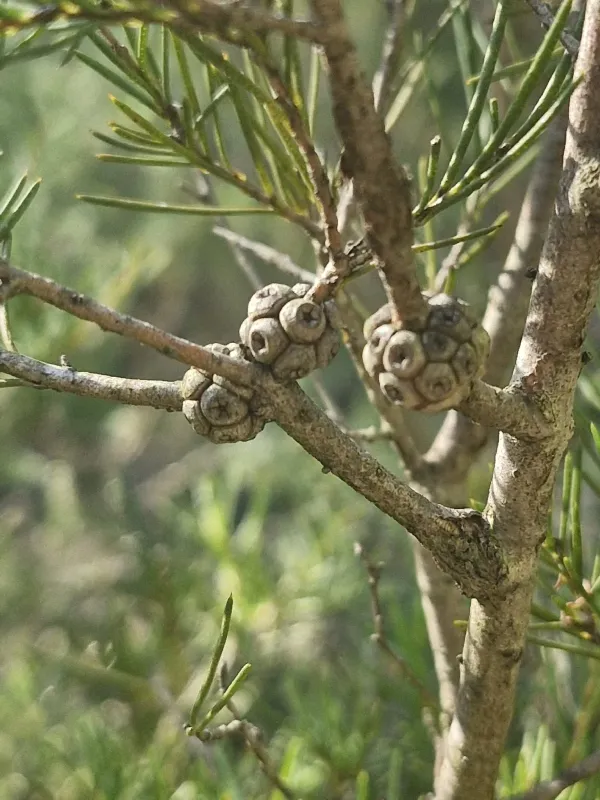
Description
Sowing dates
The propagation of Melaleuca nodosa usually begins in the spring when temperatures are consistently warm. Given the small size of the seeds, they are surface-sown on a fine growing medium and pressed gently without covering, as light is beneficial for germination.
Maintaining high humidity is crucial during the germination phase, which is typically achieved by covering sowing trays with glass or plastic. Optimal temperatures for successful seedling emergence range from 20 to 25 degrees Celsius.
Once the seedlings develop their first true leaves, they are pricked out into individual pots. Handling must be gentle to preserve the delicate root structure, which is vital for the plant's future growth vigor.
Outdoor planting should only occur after all risk of frost has passed. Melaleuca nodosa thrives when transitioned gradually to brighter light conditions to prevent transplant shock.
Commercial producers often prefer vegetative propagation via semi-hardwood cuttings. This method ensures uniformity in the crop and allows for faster maturation compared to growth from seeds.
Growing requirements
Melaleuca nodosa, a member of the Myrtaceae family, is native to the diverse landscapes of Australia. It demands full sun exposure to maintain its characteristic foliage density and to stimulate regular flowering cycles.
The species prefers light, well-draining soils, particularly sandy or loamy textures. It is notably sensitive to waterlogged conditions, which can lead to root degradation and eventual plant death.
In terms of climate, the plant is best suited to Mediterranean or warm-temperate regions. It lacks cold hardiness and requires protection if temperatures drop below freezing for extended periods.
While the mature plant exhibits significant drought tolerance, consistent watering is essential during the establishment phase. Once the root system is well-developed, it can withstand dry spells efficiently.
Fertilization should be kept light, focusing on balanced mineral mixes that are low in phosphorus, as many Australian natives are sensitive to high nutrient levels in the soil.
Main diseases and pests
The most common biological threats include root rot pathogens, specifically when the soil remains too wet for extended durations. Ensuring proper aeration is the best preventative measure against these infections.
Insects such as spider mites and scale insects can become a problem, particularly in environments with low humidity or poor air circulation. They feed on plant sap, leading to yellowing leaves and stunted growth.
Mealybugs are another potential pest that congregates in leaf axils, necessitating systematic inspection and, if necessary, the application of horticultural oils or approved insecticides.
Fungal leaf spots can occur if the foliage is kept continuously wet or if the planting density is too high. Pruning for better airflow is essential to keep the canopy healthy and resilient.
Nutritional deficiencies, such as iron chlorosis, are observed in soils with high alkalinity. Adjusting the soil pH or using chelated iron supplements can effectively restore the deep green color of the foliage.