
Melaleuca micromera
Melaleuca micromera
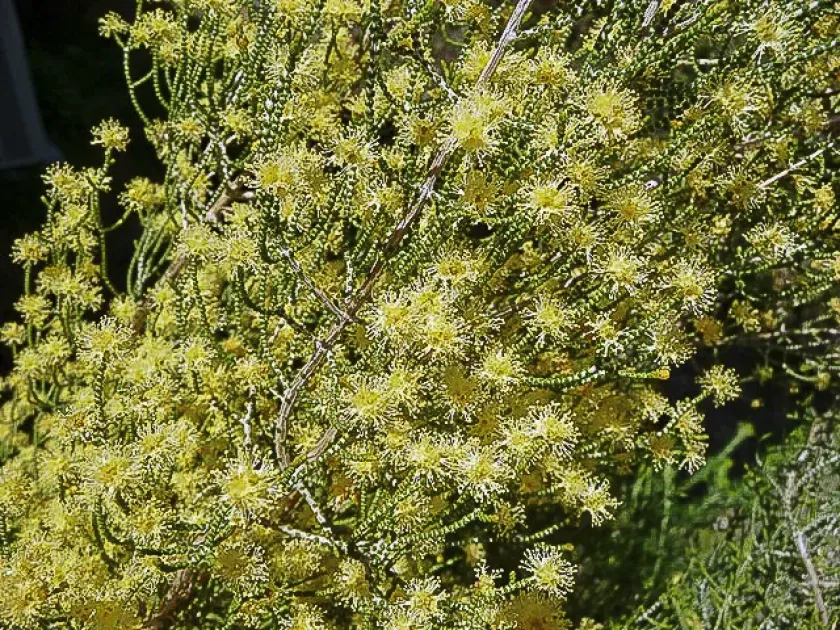
Description
Growing requirements
Melaleuca micromera is a distinctive evergreen shrub belonging to the Myrtaceae family. Native to Western Australia, it is known for its compact growth habit and fine, scale-like foliage that gives the plant a unique texture.
This species thrives in nutrient-poor, sandy soils that allow for excellent water drainage. In its native habitat, it is well-adapted to the harsh, arid conditions of the Australian scrublands.
The plant requires full sun exposure to maintain its dense, branching structure. Partial shade often results in legginess and reduced foliage density, which diminishes the ornamental value of the shrub.
Regarding water management, Melaleuca micromera requires moderate moisture but cannot tolerate waterlogged conditions. It is essential to ensure that the potting medium or garden soil drains quickly after irrigation.
As a warm-climate plant, it is not frost-hardy and requires protection during colder months. It is most suitable for xeriscaping in Mediterranean climates or as a greenhouse specimen in cooler zones.
Main diseases and pests
Root rot is the most significant threat to Melaleuca micromera, primarily caused by overwatering or soil mixes that retain excessive moisture for prolonged periods.
Pest issues often include infestations of spider mites or scale insects, particularly when the plant is kept in low-humidity indoor environments or poorly ventilated greenhouses.
Excessive fertilizer application should be avoided, as plants adapted to low-nutrient soils can experience leaf tip burn and physiological stress from high salt concentrations.
Fungal leaf spots can occur if the foliage remains wet for extended periods in high-humidity, still-air conditions; proper spacing is vital for air circulation.
Regular inspection of the undersides of leaves and stems is recommended to detect pests early and apply appropriate control measures before significant damage occurs.