
Melaleuca lateritia
Melaleuca lateritia
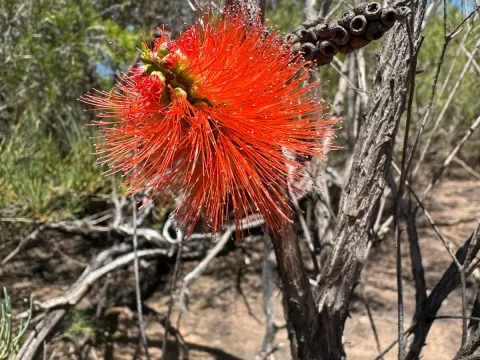
Melaleuca lateritia, commonly known as the Robin Redbreast Bush, is an evergreen shrub belonging to the Myrtaceae family. Native to the southwest of Western Australia, it thrives in environments that provide consistent moisture, often naturally found near swamps or along watercourses.
What the section contains
Melaleuca lateritia
The cultivation of this plant requires a location with full exposure to sunlight. High light intensity is essential to ensure the development of its characteristic bright orange or copper-colored bottlebrush-like flowers, which are the main attraction of this species.
Regarding soil, the plant prefers sandy, well-draining substrates. While it is adapted to survive temporary inundation in the wild, cultivation in pots or garden beds requires excellent drainage to prevent root rot, especially during cooler periods when evaporation rates are low.
Melaleuca lateritia is a frost-sensitive plant that flourishes in warm, temperate to tropical climates. In regions with freezing winters, it should be managed as a container plant and moved to a greenhouse or protected indoor area to ensure survival throughout the dormant season.
Cultural practices should emphasize minimal phosphorus fertilization. Like many Australian native plants, Melaleuca species are highly efficient at nutrient uptake and can be sensitive to fertilizers with high phosphorus content, which can cause significant physiological stress.
The primary use of Melaleuca lateritia is ornamental, serving as a decorative feature in gardens and public landscapes. Its striking flowers and dense foliage make it an excellent choice for hedge-planting or as an individual specimen in xeriscaped gardens.
Seed harvesting is possible once the woody capsules have fully matured on the plant. These capsules retain the seeds for long periods and typically open only when the plant undergoes a period of drought or upon the death of the specific branch, a mechanism evolved for survival.
Post-flowering maintenance involves light pruning to manage the shrub's size and encourage denser growth. By trimming the tips of the stems after the flowers fade, gardeners can stimulate new shoots, ensuring a more prolific flowering display in the following growing season.
In floristry, the stems of this species are valued for their durability. They can be used in fresh arrangements to provide a unique texture and vibrant color, lasting for a considerable time in water provided that the foliage is kept clean and free from pests.
While not a major commercial crop, the plant remains a subject of interest for native plant enthusiasts. It supports local biodiversity by providing nectar for pollinators, including native birds and insects, which find the tubular flowers easily accessible.
Root rot, often caused by soil-borne pathogens such as Phytophthora, is a significant threat to the health of Melaleuca lateritia. It is most prevalent in poorly drained soils where stagnant water promotes fungal growth and compromises the root system integrity.
Common pests include scale insects and spider mites, particularly when the plant is kept in indoor conditions with low humidity. These pests can cause yellowing of the leaves and premature drop, which detracts from the plant's overall aesthetic value.
Nutrient deficiencies, particularly iron chlorosis, may occur if the soil pH is too high. This condition manifests as yellowing between the veins of the leaves, indicating the plant's inability to effectively transport necessary micronutrients for chlorophyll production.
Mechanical damage from strong winds or improper handling during maintenance can create entry points for secondary infections. Ensuring the plant is well-staked when young and avoiding over-pruning helps maintain its natural resistance to environmental stressors.
- Monitoring for signs of sap-sucking insects during the spring growth phase.
- Ensuring adequate spacing between plants to allow for airflow and prevent fungal development.
- Regular soil testing to maintain slightly acidic to neutral pH levels.