
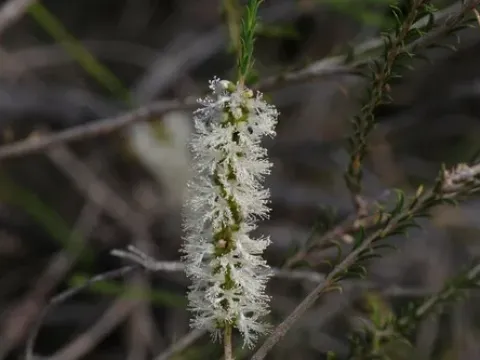
Melaleuca hamulosa
Melaleuca hamulosa
Melaleuca hamulosa is a hardy shrub belonging to the Myrtaceae family. Native to Western Australia, it has evolved to thrive in environments that challenge many other plant species, including arid and semi-arid conditions.
What the section contains
Melaleuca hamulosa
The plant requires well-drained, sandy or loamy soils to prevent waterlogging, which is critical for its health. Its tolerance for saline soils makes it a significant candidate for ecological restoration and land rehabilitation projects.
Exposure to full sunlight is essential for the plant to achieve its potential growth and flowering cycle. Once established, Melaleuca hamulosa demonstrates excellent drought resistance, minimizing the need for supplemental irrigation.
From an agrotechnical perspective, it is suited for temperate to tropical climates where frost intensity is low. Successful cultivation relies on site selection that avoids low-lying areas prone to frost pockets or water accumulation.
Economically, this species is utilized for windbreaks, soil stabilization, and ornamental purposes due to its aesthetic appeal. It plays a vital role in maintaining ecological balance in challenging landscape environments.
The primary threats to Melaleuca hamulosa are root pathogens associated with poor soil drainage. Waterlogging creates a high-risk environment for fungal infections that can rapidly compromise the root system.
Pests such as scale insects and spider mites may target the foliage, particularly in nursery or greenhouse conditions. Integrated pest management practices are recommended to maintain plant vitality.
Weed pressure during the early establishment phase is a major factor that can retard the growth rate of young plants. Proper site preparation and the use of organic mulch can significantly mitigate this risk.
Mechanical injuries to the bark can lead to the introduction of wood-boring insects or pathogens. Careful handling and maintenance of the shrub are necessary to preserve its physical integrity.
Environmental stresses, such as extreme atmospheric humidity combined with stagnant air, can also contribute to the development of powdery mildew. Ensuring adequate air circulation around the plants is a key management strategy.