
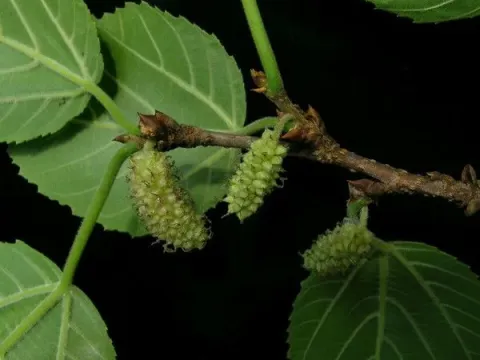
Serrated mulberry
Morus serrata
Serrated mulberry (Morus serrata) is a deciduous tree belonging to the Moraceae family. Naturally, this species is indigenous to the Himalayan regions, thriving at altitudes ranging from 1200 to 3000 meters above sea level.
What the section contains
Serrated mulberry
The tree is adapted to specific mountain climate conditions, characterized by significant temperature fluctuations. It requires well-drained, fertile soil to ensure its healthy development and prevent root rot.
For successful cultivation, planting sites should be chosen in sunny areas protected from strong, drying winds. The soil should ideally have a neutral or slightly alkaline pH and be rich in organic matter.
Botanical identification is based on the distinct serrated edges of the leaves, which set it apart from other mulberry species. The tree features a robust canopy and can grow to significant heights in favorable conditions.
Agrotechnical care includes moderate irrigation during the early growth stages, as young saplings are particularly sensitive to moisture extremes, requiring a balance between consistent hydration and soil aeration.
The economic utility of the serrated mulberry is multifaceted, encompassing forestry development, landscaping, and the production of high-quality timber for artisanal purposes.
While the fruits are edible and possess a pleasant flavor, they are primarily gathered for regional culinary uses, such as jams and dried snacks, rather than intensive industrial food processing.
The timber of Morus serrata is highly valued for its durability, hardness, and attractive grain pattern. It is commonly utilized in the manufacturing of musical instruments, high-end furniture, and handicrafts.
The foliage serves as a viable food source for silkworm larvae. Research into this species often focuses on its potential as a hardy alternative for traditional sericulture in temperate or high-altitude regions.
Beyond timber and food, the species is widely recognized for its role in soil conservation. Its extensive root system is highly effective in stabilizing mountain slopes and preventing erosion in degraded landscapes.
The primary threats to Morus serrata involve fungal infections, most notably powdery mildew, which thrives in humid conditions where canopy density inhibits proper air circulation.
Insect pests, including various species of leaf-eating beetles and caterpillars, can cause substantial damage to the foliage, which negatively impacts the tree's overall photosynthetic efficiency.
Boring insects, such as bark beetles, pose a severe threat by excavating galleries within the wood. Infestations of this nature can significantly compromise the structural integrity of the trunk.
Bacterial blight of the bark is another major concern that necessitates early intervention. Sanitary pruning and the sterilization of equipment are essential to control the spread of these pathogens.
Effective management requires a combination of good silvicultural practices, including proper spacing to ensure ventilation, and the application of biological pest control methods during active growing seasons.