
Snakewood
Brosimum guianense
Description
Growing requirements
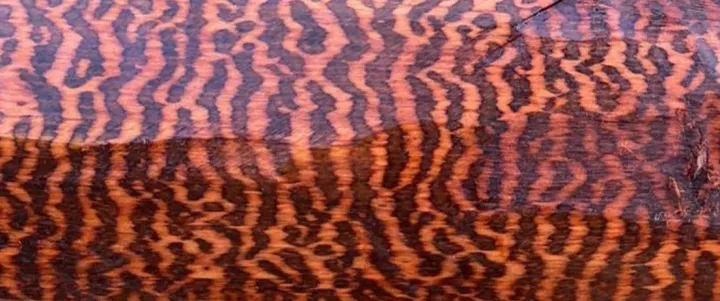
Snakewood (Brosimum guianense) is an evergreen tree belonging to the Moraceae family. It is renowned for producing one of the most expensive and distinctively figured timbers in the world, often referred to as snake wood due to its unique patterns.
The tree originates from the tropical rainforests of Central and South America. It requires a humid, tropical environment with high annual rainfall to thrive and cannot survive in regions with cold temperatures or significant seasonal frost.
Optimal growing conditions involve deep, fertile, and well-drained soils. Because the species naturally grows in forest tiers, young trees require partial shade, while mature specimens benefit from direct sunlight to maintain steady growth rates.
Agricultural management is challenging due to the species' extremely slow growth rate. Successful cultivation requires a long-term investment horizon, as it takes many years for the tree to reach a harvestable size for commercial timber production.
Proper soil maintenance, including the presence of organic matter and adequate moisture levels, is essential. The tree is generally sensitive to soil compaction and waterlogging, which necessitates careful site selection and management.
Harvesting
The harvest of Snakewood is focused entirely on its high-density, beautifully patterned heartwood. The dark, irregular markings against a reddish-brown background are what give the wood its immense value in the luxury goods market.
Logging involves careful selection, as the quality of the "snake" pattern is not uniform throughout the tree. Skilled loggers assess each specimen to ensure the heartwood has developed sufficient maturity and density before felling.
The wood is primarily used for high-end applications such as violin bows, knife handles, billiard cues, and luxury furniture inlays. It is exceptionally hard and dense, which makes it challenging to work with but provides excellent durability.
Due to its scarcity and the high demand for decorative timber, sustainable harvesting practices are crucial. Many programs are now focusing on reforestation efforts to protect this slow-growing species from over-exploitation in the wild.
Post-harvest processing requires slow, careful drying of the lumber to prevent checking and warping, given the wood's high density and sensitivity to moisture changes during the seasoning phase.