
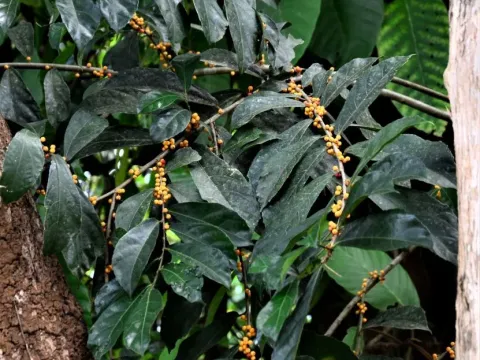
Rough-leaved fig
Ficus scaberrima
The rough-leaved fig (Ficus scaberrima) is a member of the Moraceae family, native to the tropical regions of Southeast Asia. This evergreen species is known for its distinctively textured, rough leaves, which provide a unique aesthetic and botanical characteristic.
What the section contains
Rough-leaved fig
For optimal growth, this crop requires fertile, well-draining soil that is rich in organic matter. Maintaining a consistent moisture level is crucial, as the plant does not tolerate prolonged drought or waterlogged soil conditions.
The plant thrives in a tropical climate with temperatures ranging between 22 and 28 degrees Celsius. It is not cold-hardy, meaning it must be grown in controlled indoor or greenhouse environments in temperate regions.
Light requirements for the rough-leaved fig are high, yet it prefers indirect or filtered sunlight. Direct exposure to intense sun, especially in hot afternoons, can scorch the foliage and impair the plant's physiological processes.
General care involves regular irrigation, ensuring the drainage system functions correctly, and maintaining a humid atmosphere around the canopy to simulate its native jungle habitat.
Common pests affecting Ficus scaberrima include spider mites, scale insects, and mealybugs. These pests typically thrive in low-humidity indoor environments and feed on the plant's phloem sap.
Root rot, caused by various soil-borne fungi, remains the most significant threat to the plant's health. This condition is usually a direct consequence of over-irrigation or improper drainage in the container.
Fungal diseases like anthracnose may appear as spots on the foliage. These infections are encouraged by poor air circulation and high humidity combined with stagnant air, which promotes fungal spore germination.
Management of these threats involves a combination of cultural practices, such as pruning affected areas, and the use of targeted biological or chemical control agents when infestations exceed threshold levels.
Healthy plants with strong immunity are less susceptible to infestations. Therefore, regular fertilization and monitoring of the environmental conditions are essential components of integrated pest management for this ficus species.