
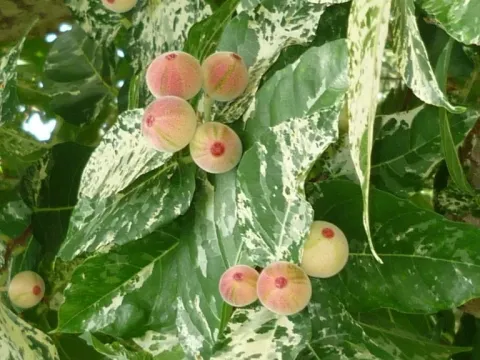
Rough-leaved fig
Ficus aspera
The rough-leaved fig (Ficus aspera) is a member of the Moraceae family. It is a robust evergreen species native to the tropical forests of the Pacific islands, including Fiji and Vanuatu, where it thrives in humid and warm environments.
What the section contains
Rough-leaved fig
Botanically, this species is defined by its characteristic rough, sandpaper-like leaf texture. The leaves are often variegated, making it a popular choice for indoor plant collections and botanical gardens that specialize in tropical flora.
The culture requires tropical climatic conditions, with an optimal temperature range between 20°C and 25°C. It is highly sensitive to cold drafts and sudden drops in temperature, which can lead to physiological stress and rapid leaf drop.
In terms of substrate, Ficus aspera thrives in nutrient-rich, well-draining soil mixtures. Adequate drainage is crucial, as the root system is highly susceptible to hypoxia caused by waterlogged soil conditions.
The plant requires bright, indirect light to maintain its vibrant appearance and leaf patterning. Direct sunlight in midday can cause leaf scorch, while extremely low light levels can result in the loss of variegation and leggy growth.
Spider mites are the most common pests affecting Ficus aspera. These small arachnids thrive in low humidity conditions and can quickly colonize the underside of leaves, causing discoloration.
Mealybugs are another significant threat, often found clustering in leaf axils or along the stems. They extract plant sap and produce honeydew, which may subsequently lead to the development of sooty mold.
Root rot is the most serious disease affecting this species, almost always resulting from improper irrigation and poor soil aeration. Once the root system is compromised, recovery is rarely successful.
Fungal leaf spot diseases may occur in environments with high humidity and poor ventilation. Keeping the plant foliage dry and ensuring sufficient air movement is vital for disease prevention.
Effective management includes regular inspection of the leaf underside, maintaining optimal humidity levels, and prompt application of biological or chemical control agents when pest populations are identified.