
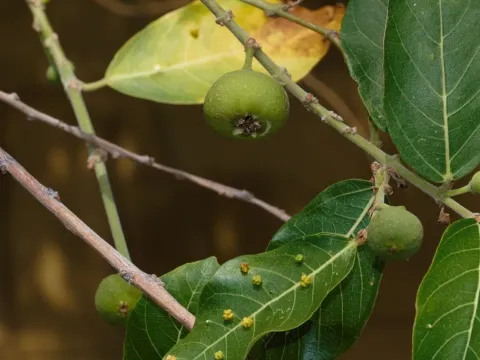
Sandpaper Fig
Ficus capreifolia
The Sandpaper Fig (Ficus capreifolia) is a distinct species within the Moraceae family, native to tropical Africa. It typically grows as a riparian shrub or small tree, often found along the banks of rivers and streams where soil moisture is consistently high throughout the year.
What the section contains
Sandpaper Fig
Botanically, the species is defined by its rough, sandpapery leaves. The foliage is covered in stiff, coarse trichomes, which give the plant its characteristic abrasive texture. This adaptation is unique among many common fig species and serves as an important diagnostic feature for field identification.
Regarding climate requirements, the plant thrives in tropical environments with high humidity and warm temperatures. It requires a stable, frost-free climate to maintain healthy growth, making it primarily a plant of the tropics when grown in open-field conditions.
Cultivation requires well-draining, nutrient-rich soil. While the species naturally occurs near water, stagnant water must be avoided in horticultural settings to prevent root rot. Proper aeration of the root system is essential for the plant to achieve its maximum biomass potential.
Historically and economically, the plant is known for the abrasive quality of its leaves. Local communities have traditionally utilized these leaves as natural sandpaper for polishing wood and household tools, highlighting the unique functional value of this plant species.
The primary threats to Ficus capreifolia in cultivation are soil-borne pathogens. Overwatering remains the most critical issue, as it creates anaerobic soil conditions that lead to severe root decay and eventual death of the plant if not managed properly.
Pest pressures primarily include spider mites and scale insects, especially when the plant is kept in environments with low humidity. Integrated pest management, including regular foliage inspection and environmental control, is necessary to keep the population of these pests under control.