
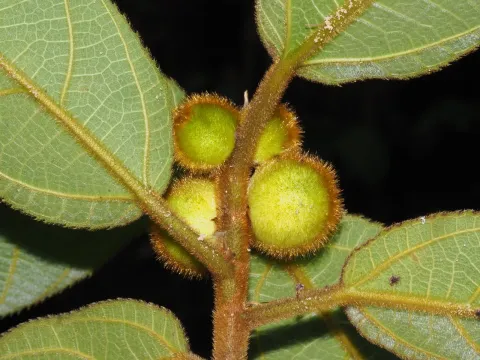
Rusty Fig
Ficus fulva
The Rusty Fig (Ficus fulva) is a distinct species belonging to the Moraceae family, native to the tropical regions of Southeast Asia. It is primarily found in humid forest environments where it thrives as a shrub or small tree, distinguished by the dense, rust-colored hairs covering its foliage and stems.
What the section contains
Rusty Fig
The botanical classification of this species highlights its unique morphology, which requires specific care compared to more common indoor fig varieties. It demands high levels of humidity and stable environmental conditions to maintain its characteristic growth habit and foliage health throughout the year.
Cultivation practices for Ficus fulva emphasize the need for well-draining, nutrient-rich soil. The substrate should be slightly acidic to neutral, allowing for adequate aeration of the roots, which is vital to prevent root rot in a containerized environment.
Optimal light conditions include bright, indirect sunlight to prevent leaf scorching while ensuring sufficient photosynthesis. Prolonged exposure to deep shade will cause the plant to lose its vigor and structural integrity, leading to thin and weak stems over time.
Thermal management is essential for this species, as it is highly sensitive to cold drafts and rapid temperature fluctuations. Maintaining a temperature range of 22 to 28 degrees Celsius ensures continuous growth and prevents the plant from entering a state of unwanted dormancy.
Typical threats include common greenhouse pests such as spider mites, aphids, and scale insects, which often colonize the underside of the leaves. Regular inspection and the application of horticultural oils or systemic insecticides are recommended to maintain plant hygiene.
Root and crown rots are the most common pathological threats caused by overwatering or poor drainage. Proper management of irrigation cycles and the use of a sterile potting medium significantly reduce the risk of fungal infections and preserve the health of the root system.