
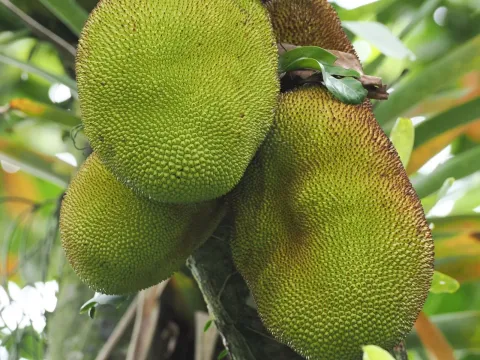
Jackfruit
Artocarpus heterophyllus Lam.
Jackfruit (Artocarpus heterophyllus) is a tropical evergreen tree of the Moraceae family, traditionally propagated through seeds, although vegetative propagation is preferred for commercial orchards.
What the section contains
Jackfruit
Seeds should be sown immediately after removal from the ripe fruit, as they possess short viability and rapidly lose their ability to germinate if allowed to dry out.
Seedlings require a nursery environment with partial shade, consistent moisture, and protection from extreme weather conditions during their early developmental stages.
Grafting techniques, such as cleft or patch budding, are standard practice for propagating superior cultivars, ensuring genetic consistency and earlier fruit production.
Transplanting to the final site should ideally occur at the beginning of the rainy season to minimize transplant shock and allow the root system to establish effectively.
This crop thrives in hot, humid tropical climates and is highly sensitive to cold, with even light frosts causing significant damage or tree mortality.
Ideal growth occurs at temperatures between +22 and +35 degrees Celsius, requiring a location that is well-protected from cold winds and frost-prone areas.
Deep, fertile, and well-drained soil is crucial for successful cultivation; jackfruit trees cannot withstand waterlogged conditions, which lead to root rot.
Full sun exposure is necessary for healthy canopy development and optimal fruiting, though saplings may benefit from moderate light filtering.
Adequate spacing, typically 10 to 12 meters apart, is essential due to the massive size and spreading nature of the tree's mature canopy.
Jackfruit is renowned for its high yield potential, with a mature tree capable of producing upwards of 150 to 200 large fruits during a single season.
The fruit is the largest tree-borne fruit in the world, with individual specimens often reaching weights between 5 and 40 kilograms upon full maturity.
The harvest cycle can vary depending on the local climate and cultivar, but most trees begin to produce fruit within 3 to 5 years after planting.
Fruit production is distributed along the trunk and main branches, a botanical characteristic that allows for efficient monitoring of fruit development.
Nutritionally dense and versatile, the fruit provides significant amounts of carbohydrates, dietary fiber, and various vitamins, supporting both local food security and export markets.
Stem and fruit borers represent the most significant pest threats, causing internal damage to the wood and reducing the overall vigor and productivity of the tree.
Common sap-sucking insects, such as mealybugs and scale insects, frequently infest young foliage and shoots, weakening the plant and promoting fungal growth.
Rhizopus rot (soft rot) is a prevalent fungal disease that affects the fruit, particularly under conditions of high humidity and poor orchard hygiene.
Effective management strategies include regular sanitary pruning, removal of affected fruit, and the application of integrated pest management programs.
- Regular inspection of the trunk for borer entry holes.
- Keeping the base of the tree clear of debris.
- Use of pheromone traps for borer monitoring.
- Improving canopy airflow to reduce fungal risks.
Identifying the correct harvest time is a skill based on appearance: the fruit's skin turns from a vibrant green to a duller, pale yellow or brownish shade.
A mature jackfruit emits a strong, distinctive, and sweet aroma, and the spikes on its surface become flatter and spaced further apart as the fruit expands.
The harvest is performed by cutting the fruit stalk with a sharp knife, ensuring the tree is not damaged during the removal of these heavy fruits.
The tree produces a copious amount of sticky latex, so harvesters typically apply oil to their hands and tools to prevent the substance from adhering.
Post-harvest handling is critical, as fruits are highly perishable and should be moved to a cool, shaded environment to extend their limited shelf life.