
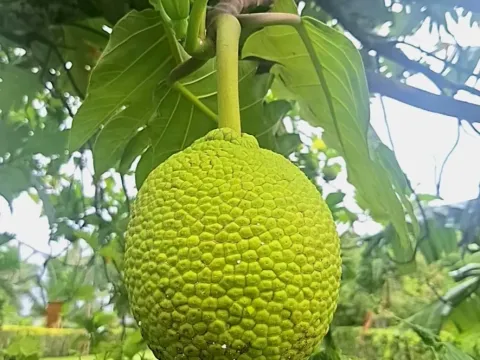
Breadfruit
Artocarpus altilis (Parkinson) Fosberg
Breadfruit (Artocarpus altilis) is a member of the Moraceae family. While it produces seeds in some varieties, commercial propagation is almost exclusively vegetative to ensure the uniformity of fruit quality and yield characteristics.
What the section contains
Breadfruit
The most common propagation method is using root cuttings or suckers. These are carefully removed from the mother tree once they reach a height of approximately 30–60 cm and have developed their own root system.
Planting is ideally scheduled for the beginning of the rainy season. This allows the saplings to establish themselves in the soil before the onset of any potential dry periods, which could stress the young plant.
The planting hole must be wide and deep, enriched with organic compost to provide necessary nutrients. A proper drainage layer at the bottom of the hole is essential to prevent waterlogging, which the species dislikes.
Distance between trees should be at least 10–12 meters. Breadfruit trees grow into large, spreading canopies, and overcrowding significantly reduces productivity due to competition for sunlight.
Breadfruit is a strictly tropical tree requiring high temperatures, ideally between 20°C and 35°C. It is extremely sensitive to cold, and temperatures below 10°C can cause significant damage or death to the plant.
Annual rainfall of 1500–3000 mm is preferred. The tree thrives in high humidity environments and requires consistent soil moisture, especially during the early years of development to ensure vigorous growth.
Deep, fertile, and well-drained alluvial soils are ideal for breadfruit cultivation. It is tolerant of various soil types, but heavy clay soils that retain excess water should be avoided to prevent root diseases.
The optimal soil pH range is 6.0–7.4. The tree shows some tolerance to saline conditions, making it suitable for coastal areas, provided it is protected from strong, direct oceanic winds.
Young trees benefit from regular mulching around the base. This practice helps maintain soil temperature, reduces weed growth, and improves the overall nutrient content of the topsoil.
A mature breadfruit tree can produce between 50 and 200 fruits per year. Each fruit typically weighs between 0.5 and 3 kg, depending on the specific cultivar and the availability of water and nutrients.
Productivity begins at age 3–5 for vegetatively propagated trees. The yields increase steadily, reaching a peak when the tree is 10 to 30 years old, making it a very reliable food source.
Fruits are rich in carbohydrates, dietary fiber, and vitamins, serving as a staple food in many tropical regions. They can be harvested at different stages, from green for cooking to ripe for consumption.
The versatility of the crop allows it to be used in various culinary forms: boiled, roasted, baked, or fried. In many Pacific cultures, the fruit is fermented in pits to preserve it for long periods.
Beyond human consumption, excess fruits and leaves are frequently used as high-quality livestock feed, integrating the tree into a circular farm management system.
Fungal diseases like anthracnose are common threats to breadfruit, especially during periods of excessive rainfall or poor air circulation within the tree canopy.
Insect pests, such as mealybugs and fruit flies, can significantly lower the quality of the fruits. Integrated pest management is recommended to avoid heavy reliance on synthetic chemicals.
Root rot caused by stagnant water or soil-borne pathogens is a critical threat. Ensuring adequate drainage and avoiding injury to the root system during field operations is vital for prevention.
Regular sanitation, such as removing decaying fruits from the ground, is necessary to minimize the spread of pests and diseases within the orchard.
Proper pruning is not only for harvest convenience but also serves as a disease management tool, ensuring light and air penetrate the canopy to inhibit fungal growth.
Harvesting breadfruit is a delicate operation. Fruits are picked when mature but firm, which is indicated by a smooth skin and a change in color from vibrant green to a duller, pale hue.
Since the fruits are prone to bruising, harvesting must be done manually using specialized picking poles equipped with a hook and net to gently catch the fruit without hitting the ground.
The post-harvest shelf life of fresh breadfruit is very short, typically 2–3 days. Rapid consumption, immediate processing, or preservation is required to maintain the quality of the product.
Preservation techniques include sun-drying the fruit slices or grinding them into flour, which creates a stable, exportable, and easily storeable food product.
Because breadfruit trees can grow quite tall, harvesting often requires ladders or mechanical lifts, making it one of the most labor-intensive aspects of managing a breadfruit orchard.