
Chempedak
Artocarpus integer (Thunb.) Merr.
Description
Growing requirements
Chempedak (Artocarpus integer) is a tropical evergreen tree belonging to the Moraceae family. It is closely related to the better-known jackfruit but is distinguished by its smaller size and specific aromatic profile of the fruit segments.
Native to Southeast Asia, this species thrives in humid, lowland rainforest environments. It requires a tropical climate with consistent temperatures throughout the year, ideally ranging between 20°C and 35°C, to ensure vigorous vegetative growth.
The tree prefers deep, fertile, and well-drained soils. It does not tolerate waterlogging, which makes the selection of an appropriate site with adequate subsurface drainage critical for the successful establishment of a new orchard.
Full sunlight exposure is essential for high yields. While the tree can tolerate partial shade during its initial sapling stage, adult trees require open canopy conditions to stimulate floral initiation and fruit development.
Agricultural management involves mulching to maintain soil moisture and consistent watering during prolonged dry spells. Propagation is typically achieved through seeds, though vegetative propagation methods like budding or grafting are preferred for high-quality cultivars.
Yield
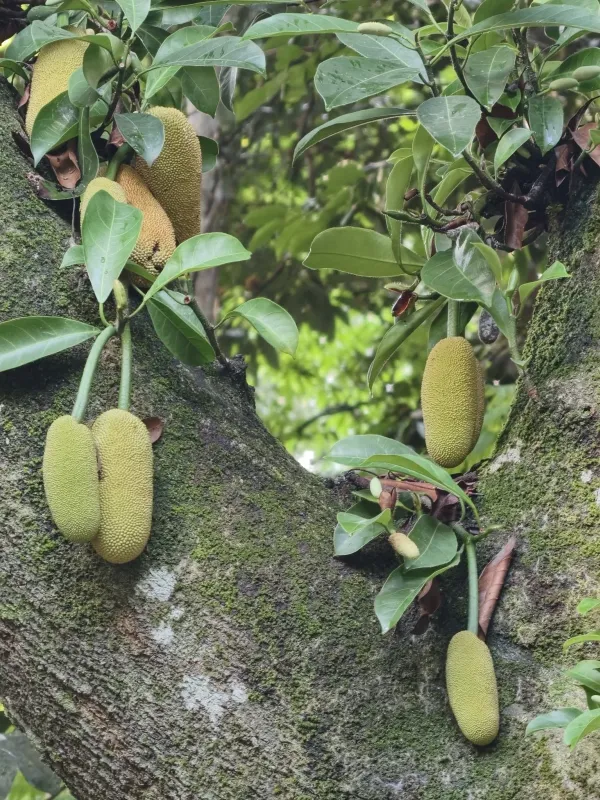
An adult Chempedak tree is known for its productive capacity, yielding numerous fruits annually. The fruits develop on the trunk and primary branches, which is a common trait among many Artocarpus species.
The fruit's flesh is typically golden-yellow, sweet, and highly aromatic. It is consumed fresh, often fried as a popular snack, or used in various desserts. The seeds, which are also edible, are often boiled or roasted for consumption.
Beyond its culinary value, the timber of the Chempedak tree is highly prized. It is durable, resistant to fungal decay, and termite-resistant, making it a valuable material for traditional construction and high-quality furniture making.
The leaves and bark contain bioactive compounds that have been utilized in traditional medicine practices. Research continues to explore the potential of these extracts for antimicrobial and anti-inflammatory pharmaceutical applications.
Economic prospects for the crop remain tied to local markets. Due to the rapid perishability of the fruit, export opportunities are limited, but the tree remains a vital component of home gardens and sustainable agroforestry systems in the region.
Main diseases and pests
Fungal diseases, particularly those affecting the root system, pose the most significant risk to Chempedak plantations. Excessive moisture and poor drainage often facilitate the development of root rot pathogens, which can be fatal to mature trees.
Fruit flies and various boring insects are the primary pests. They can significantly degrade the commercial quality of the fruit, prompting farmers to use protective fruit bagging techniques to prevent infestations during the maturation process.
Disease management focuses on preventive measures, such as maintaining optimal plant spacing to allow for adequate air circulation. This reduces the humidity around the canopy, which in turn discourages the spread of foliar pathogens.
Stem damage from wood-boring larvae is another concern that requires routine inspection. Early detection and removal of affected branches can prevent the systemic spread of the infestation within the orchard.
Integrated pest management (IPM) practices are recommended to minimize reliance on chemical treatments. This includes encouraging natural predators and ensuring the trees are sufficiently nourished to maintain a natural resistance to environmental stress.
Harvesting
Harvesting is labor-intensive and timing-dependent. The fruits are ready for collection when they emit a very strong, sweet fragrance and show a visible change in skin color. Experienced growers tap the fruit to determine ripeness by the sound produced.
Because the tree produces a sticky latex, harvesters must be careful to avoid contact with sap. The fruits are harvested using long poles with blades or by climbing, ensuring they do not drop to the ground, which would cause bruising and immediate post-harvest rot.