
Artocarpus tonkinensis
Artocarpus tonkinensis
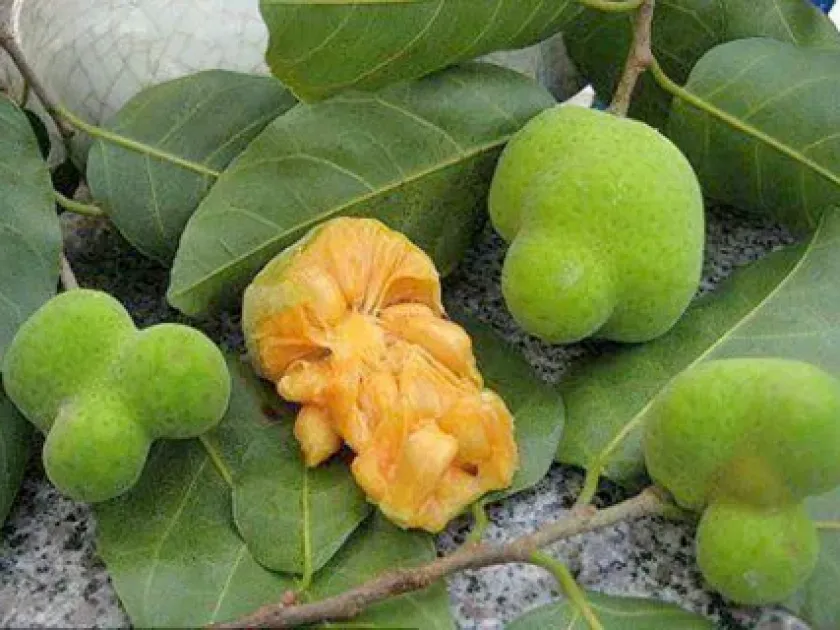
Description
Growing requirements
Artocarpus tonkinensis is a tropical evergreen tree species belonging to the Moraceae family. It is widely recognized in its native range of Southeast Asia for its fast growth and utility in agroforestry systems.
The tree originates from the tropical monsoon regions of Vietnam, Laos, and Southern China. It thrives in humid climates with consistent rainfall and high temperatures, usually ranging from 22 to 30 degrees Celsius.
Regarding soil requirements, it prefers well-drained, deep, and fertile soils that can provide adequate moisture without waterlogging. The plant is adaptable but performs best in slightly acidic to neutral soil environments.
Propagation is typically carried out through seeds or cuttings. Once established, the tree demonstrates significant resilience to various environmental conditions, though it requires protection from severe cold winds or frost.
Biologically, the tree features a dense, spreading canopy and a robust root system. Its ability to regrow rapidly after pruning makes it an ideal candidate for managed harvesting in agricultural landscapes.
Yield
The primary economic value of Artocarpus tonkinensis lies in its foliage. The leaves serve as a highly nutritious protein-rich fodder for livestock, particularly for goats and cattle, which enhances overall herd productivity.
Yield management involves systematic pruning of the branches. Farmers often implement a rotation system that allows individual trees to recover their leaf mass, ensuring a sustainable supply of fodder throughout the growing season.
In addition to its role as a forage crop, the tree is frequently utilized for soil conservation. Its root structure helps stabilize slopes, while the dropped leaves contribute significantly to the accumulation of soil organic matter.
The wood of this species, while secondary in importance to the leaves, is used locally for light construction and small-scale tool manufacturing. This makes it a multi-purpose tree suitable for smallholder farming.
Efficiency in harvesting is critical. By timing the harvests correctly, farmers can optimize the protein content of the foliage, providing the most nutritional value to their animals while maintaining the tree's health.
Main diseases and pests
Fungal infections represent the most significant threat to Artocarpus tonkinensis, especially in environments where humidity is excessively high and air circulation within the canopy is restricted.
Pest management focuses primarily on common tropical insects such as scale insects and spider mites. These pests can weaken the plant by sucking sap from the tender young leaves, potentially reducing the total fodder yield.
Strategic planting, which involves maintaining adequate spacing between trees, is essential to minimize the spread of diseases. Ensuring good airflow helps keep foliage dry and reduces the risk of fungal outbreaks.
As the leaves are intended for animal consumption, chemical pesticides must be used with extreme caution or avoided entirely in favor of integrated pest management practices and biological control agents.
Root health is equally vital. Avoiding waterlogged soil conditions prevents the development of root rots, which can lead to the sudden decline of the tree. Regular monitoring of the soil moisture status is highly recommended.