
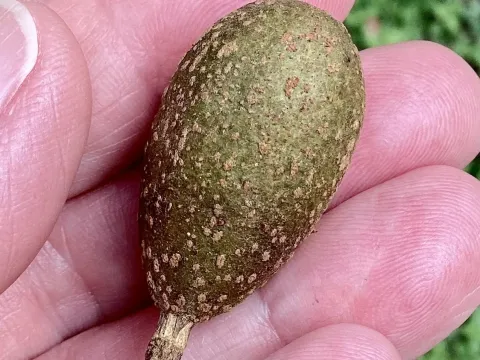
Cedrela odorata
Cedrela odorata L.
Cedrela odorata L., belonging to the Meliaceae family, is a significant tropical timber species. In its natural habitat, the tree produces dry, wind-dispersed capsules containing winged seeds that are ready for collection at the end of the dry season.
What the section contains
Cedrela odorata
Seed propagation is the primary method for establishing new plantations. Seeds are sown in nursery beds shortly after harvesting, as their viability decreases rapidly if stored under improper conditions. Germination usually occurs within two to four weeks under moist, warm conditions.
Young seedlings are highly sensitive to competition and require clear space to develop a strong root system. In nursery settings, they are typically raised in pots or containers until they reach a height of approximately 30–50 cm, which generally takes about eight months.
When transplanting, selecting the right site is crucial for long-term growth. Seedlings are planted at specific intervals, often ranging from 3x3 meters to 4x4 meters, to ensure optimal vertical growth while minimizing the development of heavy lateral branches.
Weed management during the first three years after planting is essential to avoid stunted growth. Providing consistent care and clearing the area around the base of the saplings significantly increases survival rates and promotes a faster establishment phase.
This species is native to the tropical forests of the Americas, thriving in regions that exhibit a clear distinction between wet and dry seasons. This seasonality is vital for the tree's physiological cycle, including leaf shedding and dormancy.
Cedrela odorata requires deep, well-drained soils to prosper. It is intolerant of waterlogged or poorly drained conditions, which are primary causes of root rot and overall plant mortality. Soil pH should ideally be neutral or slightly acidic.
The climate must be tropical, with average temperatures ranging between 20°C and 30°C. While the tree shows moderate drought tolerance, its commercial productivity relies on receiving annual rainfall between 1200 mm and 2500 mm.
Full solar exposure is necessary for the development of a straight, high-quality trunk. Shade causes the tree to grow in a distorted manner, making it vulnerable and reducing the timber value, so open plantations are strictly preferred.
Wind protection is another key environmental factor. Although the wood is durable, the trees are susceptible to wind damage during the early stages of growth, making the establishment of shelterbelts a standard recommendation in commercial forestry.
Known as Spanish cedar, the timber of Cedrela odorata is among the most valuable tropical woods globally. It is prized for its moderate weight, excellent workability, and distinctive aromatic scent derived from its natural essential oils.
Economic maturity for timber harvest is typically reached within 25 to 40 years. During this period, the trees grow to significant dimensions, providing high-quality logs suitable for furniture, fine cabinetry, and high-end musical instrument production.
To maximize timber quality, foresters conduct regular pruning of lower branches. This practice, often referred to as artificial pruning, prevents the formation of knots in the wood, resulting in a cleaner, more valuable finished product.
The yield potential is directly linked to the precision of plantation management. By maintaining healthy trees through thinning and monitoring, forest owners can ensure a high percentage of marketable logs per hectare.
Beyond furniture, the timber's natural resistance to decay and insect attack makes it a premium choice for storage containers, such as cigar boxes, and interior finishings, ensuring that the crop remains in high demand on the international market.
The most significant threat to Cedrela odorata plantations is the mahogany shoot borer, Hypsipyla grandella. The larvae burrow into the terminal shoots, effectively decapitating the leader and causing the tree to branch out, which ruins its timber form.
Integrated pest management (IPM) is essential to combat this borer. Planting Cedrela in mixed-species stands rather than monocultures helps reduce the borer's ability to locate host trees, thereby limiting the damage within the plantation.
Fungal diseases, such as leaf spot and anthracnose, can also become problematic under high-humidity conditions. Ensuring proper plantation spacing and ventilation is a primary preventative measure to minimize the spread of these pathogens.
Root system issues can arise on unsuitable, heavy soils, leading to susceptibility to various soil-borne pathogens. Site selection based on soil texture and drainage remains the most effective defense against these threats.
- Frequent monitoring of terminal shoots for borer damage.
- Implementation of mixed-cropping patterns to deter pests.
- Sanitary removal and disposal of heavily infested or infected individuals.