
Berg mahogany
Entandrophragma caudatum
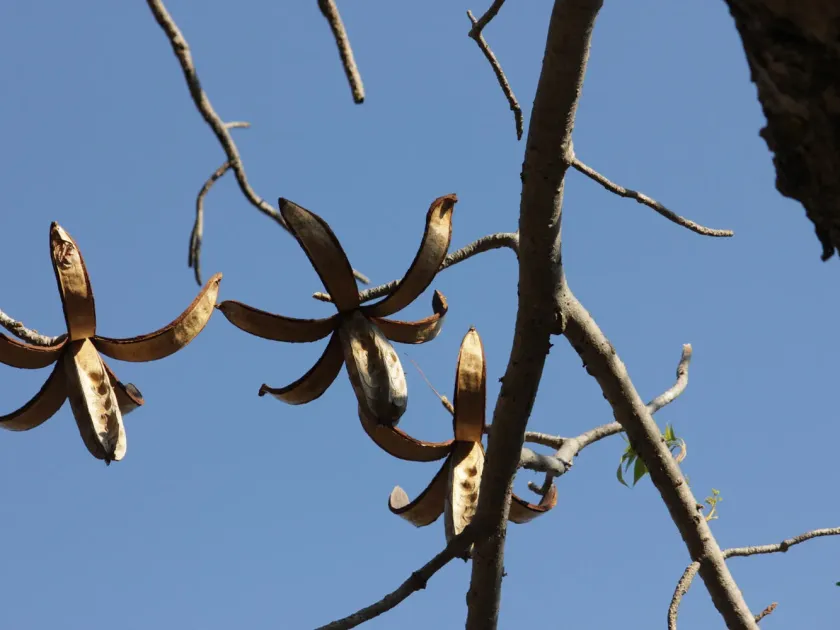
Description
Growing requirements
Entandrophragma caudatum, commonly known as Berg mahogany, is a large deciduous tree belonging to the Meliaceae family. In its native habitat, it can reach impressive heights, developing a robust trunk covered in characteristic scaly bark that sheds in irregular patches.
The species is native to tropical and southern Africa, with a range extending across countries such as Zimbabwe, Botswana, and Namibia. It thrives primarily in forest regions where it can access deep, nutrient-rich soils, often found along river valleys or within well-drained woodland plains.
Successful cultivation requires a climate characterized by warm tropical temperatures and a distinct seasonal rainfall pattern. The tree demonstrates a degree of drought tolerance, making it suitable for reforestation projects in semi-arid areas, provided the soil allows for deep root penetration.
Agricultural management involves the careful selection of planting sites and initial protection of young saplings from livestock grazing and fire. Silvicultural practices focus on maintaining optimal spacing to encourage vertical growth and the production of high-quality, clear timber stems.
The economic value of this tree is centered on its premium timber, which is highly prized for furniture making, flooring, and decorative cabinetry. Due to its slow growth rate, sustainable harvesting practices are essential to balance market demand with the long-term viability of the species.
Main diseases and pests
The species is susceptible to various pests, particularly wood-boring insects that can damage the internal structure of the trunk, significantly reducing the timber grade. Monitoring for signs of borer infestation is a crucial part of plantation management in endemic regions.
Additionally, fungal pathogens pose a threat, particularly in younger stands where moisture levels are high. Root rot and leaf blight are common issues that can hinder development, necessitating careful soil moisture management and regular health inspections of the plantation blocks.