
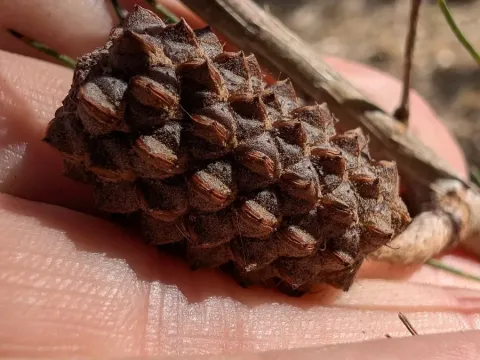
Coastal She-oak
Allocasuarina littoralis (Salisb.) L. A. S. Johnson
Propagation of Allocasuarina littoralis is typically achieved through seeds, which are known for their decent viability if stored in a cool, dry environment. Stratification is recommended to enhance the germination rate.
What the section contains
Coastal She-oak
Sowing in nursery conditions is ideally performed in spring when consistent warm temperatures prevail. Using a well-draining substrate, enriched with sand and peat, promotes healthy development of the root system.
Seeds should be sown at a very shallow depth, as they require light to stimulate the germination process. Keeping the surface consistently moist without causing waterlogging is crucial during the early stages.
Seedlings need to be hardened off in containers before final transplanting. This practice allows for better control of environmental factors and ensures the plants are robust enough for field conditions.
Transplanting into the field is best performed after the threat of frost has passed. Site preparation, including thorough weed control, is essential to give the young trees a competitive advantage.
Allocasuarina littoralis belongs to the Casuarinaceae family and is native to the eastern coast of Australia. It is highly adaptable, thriving in diverse environmental conditions ranging from coastal dunes to inland forests.
The species is strictly heliophilous, requiring full sun exposure for optimal growth. Insufficient light results in sparse foliage and poor structural development, which diminishes its aesthetic and economic value.
The tree demonstrates remarkable soil versatility, growing well in sandy, rocky, or nutrient-poor soils. However, excellent drainage is non-negotiable, as waterlogged conditions quickly lead to root rot.
Coastal She-oak is highly resistant to strong winds, making it an excellent choice for windbreaks. Its tough, needle-like branchlets are resilient against salt-laden coastal breezes and mechanical damage.
While the tree shows good drought tolerance once established, it requires regular irrigation during its juvenile period to ensure successful establishment in the landscape.
The primary agricultural and economic use of Allocasuarina littoralis is the production of high-density timber. Its wood is prized for its extreme hardness, durability, and rich decorative texture.
Woodworking professionals value the timber for small-scale projects, including furniture parts, tool handles, and turning items. It is considered a premium material in specialty cabinetry.
Beyond timber, the tree provides significant ecological benefits. Its ability to fix atmospheric nitrogen via root nodules improves soil fertility, making it an excellent companion for land restoration projects.
In agroforestry, it serves as a robust windbreak, protecting sensitive crops from wind damage and reducing soil erosion. Its dense canopy effectively filters dust and stabilizes the microclimate.
Cultivation for biomass is feasible in suitable climates, providing a sustainable source of fuel or raw material for industrial applications requiring high-density woody biomass.
Allocasuarina littoralis possesses a high natural resistance to most agricultural pests. The density and chemical composition of its wood act as an effective barrier against many boring insects.
The most significant threat to plant health is root disease caused by poor drainage. Excess moisture around the root zone is the primary cause of decline in managed plantations.
Young plants may be susceptible to vertebrate pests, such as rodents that graze on the bark. Protective guards or individual tree cages are recommended during the first few years of growth.
Maintaining proper spacing between trees helps reduce the risk of spreading fungal diseases. Good airflow is essential to keep the foliage dry and healthy during humid seasons.
Sanitary maintenance, including the removal of dead or diseased branches, is generally sufficient to manage health issues, eliminating the need for extensive chemical control methods.