
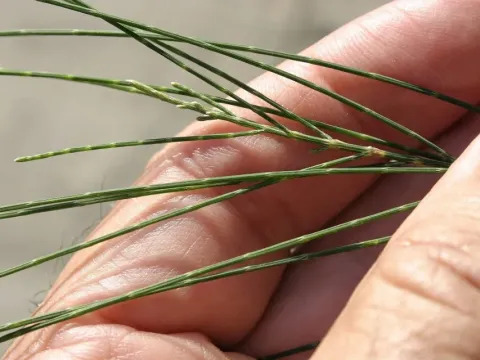
Casuarina oligodon
Casuarina oligodon
Casuarina oligodon is typically propagated from seeds, which are sown in specialized nurseries to ensure a high-quality supply of seedlings. Seeds retain viability when stored in cool, dry conditions, allowing for systematic forestation and plantation planning.
What the section contains
Casuarina oligodon
For successful germination, a loose, well-draining substrate with a neutral to slightly acidic pH is required. Seedlings generally emerge within 10 to 20 days after sowing, provided that consistent temperature and soil moisture levels are maintained.
Once seedlings reach a height of 25–30 centimeters, they are ready for transplanting into the field or plantation. The optimal time for outplanting is the onset of the rainy season, which provides the necessary moisture for the development of a robust root system.
Planting density varies based on the intended use; for timber production, a spacing of 2x2 or 3x3 meters is recommended. For windbreaks or protective barriers, trees are planted more densely to form an effective defensive wall against strong winds.
Young saplings require regular weeding for the first two years, as they are sensitive to competition from aggressive grasses. Mulching around the base helps retain soil moisture and suppresses unwanted vegetative growth during the establishment phase.
This species belongs to the Casuarinaceae family and is a tropical tree well-adapted to high-altitude regions. It demonstrates remarkable tolerance to various soil types, even those with limited nutrient availability.
A key biological characteristic of this species is its symbiotic relationship with nitrogen-fixing bacteria of the genus Frankia. This allows Casuarina oligodon to actively enrich the soil with nitrogen, making it an essential component of sustainable agroforestry systems.
The tree thrives in sunny locations and shows poor tolerance to heavy shade during its early growth stages. Optimal temperatures for development range from 18 to 28 degrees Celsius, though it can survive brief environmental fluctuations.
While not strictly demanding regarding atmospheric humidity, the tree requires an average annual rainfall of 1500 to 2500 millimeters for vigorous growth. Mature trees exhibit significant drought tolerance, maintaining viability during dry spells.
Soil drainage is critical, as waterlogging can lead to root rot. Casuarina is particularly well-adapted to the acidic soils found throughout many regions of New Guinea and nearby islands, where it serves as a primary forest species.
The primary economic use of this culture is the production of high-quality timber, known for its exceptional density and hardness. It is traditionally utilized for residential framing, furniture manufacturing, and agricultural tool production.
In agroforestry, the tree is highly valued for creating a favorable microclimate for crops grown in the understory. Its presence helps minimize soil erosion, making it particularly useful for stabilizing steep agricultural land.
Leaf litter from the tree creates a thick layer of organic matter that decomposes rapidly, recycling nutrients back into the soil. This process contributes to improved soil structure and fertility over time, benefiting surrounding agricultural plots.
When utilized as fuelwood, the species offers high calorific output. The wood burns slowly and steadily, which makes it a preferred energy resource for local domestic and commercial needs.
Biomass yield is dependent on management intensity and the age of the plantation. With proper management, a rotational harvest cycle of 10–15 years can be established, providing a reliable and steady income for the landholder.
The main biological threats to Casuarina oligodon include fungal root diseases, which often arise due to poor drainage or waterlogged soil conditions. Various rot-inducing pathogens can infect young trees if proper site selection is neglected.
Pests such as stem borers and certain leaf-eating insects may cause localized damage. Typically, these pests target weakened trees that are already under stress from unfavorable environmental factors or poor maintenance.
Control measures primarily focus on routine monitoring of the plantation and the implementation of sanitary pruning. Removing infected plant parts helps contain the spread of disease to neighboring healthy individuals.
Adhering to crop rotation principles and avoiding large-scale monocultures significantly reduces the risk of widespread disease outbreaks. Mixed planting strategies encourage natural predation, which helps manage pest populations effectively.
Care must be taken to avoid damaging the tree bark during routine maintenance, as mechanical injuries create entry points for opportunistic pathogens. Ensuring tool cleanliness during pruning is vital for maintaining plantation health.
The timing of harvest depends on the intended end-use of the timber. For structural and construction purposes, trees are generally left to grow until they reach a trunk diameter of 20–30 centimeters.
Harvesting is conducted via manual or mechanized means, depending on the site's accessibility. Carrying out these works during the dry season is ideal, as it facilitates easier transport of timber out of the plantation area.
During harvesting, it is recommended to leave a portion of the root system in the ground to prevent slope erosion. Some landholders practice selective thinning, which allows remaining trees to access more light and nutrients, enhancing their growth.
Following harvest, timber must be dried correctly to prevent splitting and deformation. Properly seasoned wood exhibits superior durability and resistance to biological decay, ensuring it lasts for decades.
Biomass residues from harvesting can be effectively repurposed as soil conditioners. Shredded branches and leaves are distributed across the field, further enriching the topsoil with organic nitrogen and structural matter.