
Casuarina
Casuarina
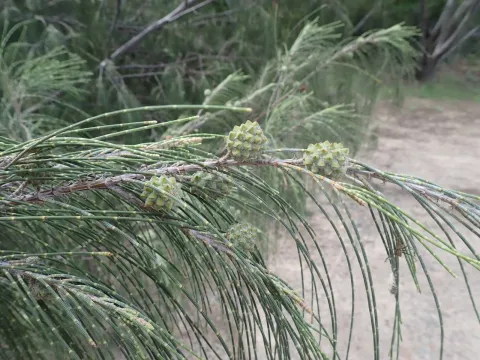
The propagation of Casuarina is primarily achieved through seeds harvested from mature, cone-like woody structures. Once these structures dry, they release tiny, winged seeds that require careful collection and storage.
What the section contains


Casuarina
Sowing should take place in controlled nursery environments during the spring season. The germination medium must be well-draining, sterile, and slightly acidic to ensure the health of the young seedlings.
Temperatures for optimal germination range between 20°C and 25°C. Consistent moisture is crucial during the early stages, but over-watering must be avoided to prevent damping-off diseases.
Vegetative propagation via cuttings is possible but requires professional handling, including the application of root-promoting hormones. This method ensures genetic uniformity among the plantation trees.
Seedlings are typically outplanted once they reach a height of 30–50 cm. Spacing during plantation establishment is vital, usually set at 2 to 3 meters to allow for adequate canopy development and resource access.
Casuarina is a highly light-demanding genus. Exposure to full sunlight is essential for maintaining strong growth rates and ensuring the structural integrity of the characteristic needle-like branches.
One of the most notable features is the plant's ability to fix atmospheric nitrogen through a symbiotic relationship with Frankia bacteria. This trait allows the species to thrive in extremely nutrient-poor soils.
The tree exhibits remarkable tolerance to salt spray and saline soil conditions. This makes it an invaluable plant for coastal reforestation projects and the establishment of shelterbelts in maritime zones.
While adapted to harsh environments, Casuarina prefers well-drained soils. However, some species show high adaptability to various soil types, ranging from sandy dunes to degraded lateritic clays.
Optimal climate conditions are found in tropical and subtropical zones. The plant is sensitive to sustained frost and freezing temperatures, which can cause significant damage or death to the tree canopy.
Economic yield for Casuarina is measured by biomass accumulation and timber volume. The wood is exceptionally dense, often referred to as "ironwood," making it highly valued for specific industrial applications.
The primary use of the timber is as high-quality firewood and charcoal. It burns slowly and cleanly, providing superior heat output, which makes it a preferred choice in the bioenergy sector.
Beyond fuel, the wood is utilized for fence posts, scaffolding, and structural construction in many regions due to its inherent resistance to decay and termites, increasing its market value.
The foliage, which consists of jointed photosynthetic branchlets, provides a nutrient-rich leaf litter. This organic matter improves soil fertility over time, benefiting the entire plantation ecosystem.
Systematic thinning and pruning can significantly improve the yield of merchantable timber, allowing the remaining trees to gain girth more rapidly while maintaining a healthy, dense forest structure.
Root rot caused by Phytophthora or other soil-borne fungi is a major threat, particularly in poorly drained or waterlogged sites. These infections can lead to rapid decline and mortality.
Various insect pests, including bark beetles and defoliating caterpillars, can affect growth. Integrated pest management strategies are necessary to protect plantations from significant foliage loss.
Stem and wood-rotting fungi like Ganoderma can infect older trees. These pathogens compromise the structural strength of the trunk, leading to increased risk of windthrow during extreme weather events.
Sunscald on the trunks of young trees can occur in very hot, arid environments. Providing shade or using protective trunk paints can mitigate this risk during the initial growth phase.
Early detection through regular field inspections is the most effective way to manage these threats, allowing for prompt removal of infected materials before pathogens can spread throughout the stand.
Harvesting cycles for Casuarina plantations typically range from 10 to 20 years. Shorter cycles are chosen for fuel or pulpwood, while longer rotations are used to produce large-diameter timber poles.
Harvesting involves mechanized felling using heavy-duty equipment, given the high density and hardness of the timber. Safety protocols are mandatory for all field operations during this period.
Processing includes delimbing and bucking the logs according to market specifications. Efficient transport and logistics are required to move the heavy timber from the harvest site to processing facilities.
Sustainability practices suggest leaving a portion of the branch biomass on the forest floor. This debris serves as a slow-release fertilizer and helps maintain the soil's nitrogen-fixing micro-ecosystem.
Post-harvest site preparation is essential for re-establishing the stand. Clearing stumps and managing soil compaction ensures the next generation of trees can grow vigorously without environmental stress.