
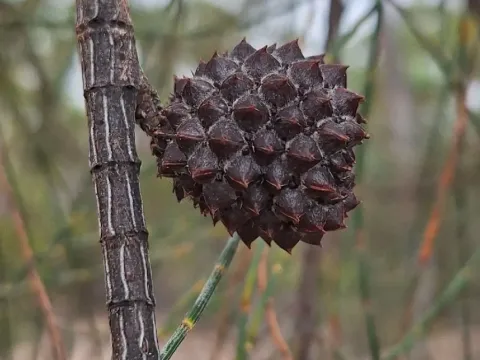
Allocasuarina
Allocasuarina
Allocasuarina is a genus of evergreen trees and shrubs belonging to the Casuarinaceae family. Native primarily to Australia, these plants are highly adapted to diverse environments, ranging from coastal sand dunes to rugged, arid inland landscapes.
What the section contains

Allocasuarina
The botanical structure of Allocasuarina is distinctive, featuring thin, needle-like branchlets that function as the primary photosynthetic organs. These modified structures effectively reduce water loss, allowing the plant to thrive in challenging, dry climates.
A crucial agricultural asset of this genus is its ability to form symbiotic relationships with Frankia nitrogen-fixing bacteria. This biological adaptation enables Allocasuarina to colonize nutrient-poor soils and contribute to nitrogen enrichment, improving the quality of degraded land.
The cultivation of Allocasuarina requires well-drained soil conditions. The plants are sensitive to waterlogging, which can compromise the root system. Ideal sites include sunny areas with sandy or rocky substrates where the plant can establish its deep root system.
As a resilient species, it exhibits strong tolerance to harsh environmental factors, including saline air near coastlines and intense winds. It is increasingly valued in arid-land agriculture for its ability to maintain growth where more demanding crops fail.
Allocasuarina is highly valued in forestry for its exceptionally hard and dense timber. Due to its durability and distinct aesthetic properties, the wood is utilized in fine woodworking, turnery, and the manufacture of high-quality furniture.
In addition to decorative timber, the genus serves as a significant source of biomass for fuel production. The wood possesses a high calorific value, making it a reliable and efficient source of heat in areas where traditional fuel sources may be scarce.
The plant plays an essential role in agroforestry as a windbreak. Its dense canopy effectively creates a buffer, protecting more sensitive agricultural crops from mechanical damage and desiccation caused by strong prevailing winds.
The accumulation of leaf litter from Allocasuarina provides a valuable organic mulch. This layer effectively suppresses weeds, prevents soil moisture evaporation, and gradually releases nutrients into the topsoil, benefiting surrounding vegetation.
Establishing commercial plantations represents a long-term approach to utilizing non-productive land. The species' ability to sustain itself in poor conditions ensures a steady, albeit slow, accumulation of valuable wood biomass over the years.
While generally hardy, Allocasuarina can be susceptible to root-rot pathogens, particularly species of Phytophthora. These fungal issues are typically linked to poor soil drainage and stagnant water, making site selection critical for plant health.
Various insect pests, such as scale insects and certain coleopteran larvae, can affect the branchlets. Integrated pest management strategies, focusing on biological controls, are preferred over broad-spectrum chemical treatments to protect the soil ecosystem.
Over-fertilization with synthetic nitrogen can negatively impact the plant's symbiotic relationship with nitrogen-fixing bacteria. Maintaining a natural soil environment is essential to preserve the plant's inherent resilience and disease resistance.
In cases of infestation, removing and destroying affected plant material is a standard practice to prevent the spread of localized pathogens or pests. Regular monitoring during the first few years of growth is crucial for plantation success.
Environmental stress, such as extreme, prolonged drought or sudden changes in local humidity, can occasionally create vulnerabilities. However, properly established stands of Allocasuarina demonstrate remarkable recovery capabilities when cultural conditions remain stable.