
Gymnostoma
Gymnostoma
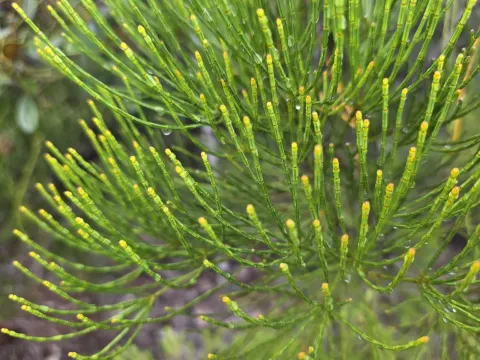
Gymnostoma is a genus of evergreen trees and shrubs belonging to the Casuarinaceae family. These plants are closely related to Casuarina and are often characterized by their needle-like, photosynthetic branchlets, while the actual leaves are reduced to tiny scales arranged in whorls.
What the section contains


Gymnostoma
The natural habitat of Gymnostoma includes the tropical regions of Southeast Asia, the Malay Archipelago, New Guinea, the Philippines, and various Pacific islands. They primarily thrive in warm, humid tropical environments, ranging from coastal areas to mountain rainforests.
Climate requirements for this plant are strictly tropical, demanding high humidity and consistent temperatures. Gymnostoma is highly susceptible to frost damage, meaning it cannot survive in temperate climates without significant protection or greenhouse environments.
Regarding soil requirements, Gymnostoma prefers well-drained, slightly acidic to neutral soils. It is critical to avoid waterlogged conditions, as the root system is highly sensitive to hypoxia, which can rapidly lead to plant decline in poorly draining substrates.
The primary economic use of Gymnostoma is as an ornamental plant for tropical landscaping. Additionally, some species provide hard and durable timber, which is locally prized for construction purposes and small-scale woodcraft due to its structural density.
The primary threats to Gymnostoma health include root rot pathogens, which thrive in waterlogged or poorly aerated soil. Maintaining a strict irrigation schedule and ensuring the soil medium is highly porous are essential prophylactic measures.
Pests such as scale insects and spider mites are common in controlled environments, especially when air circulation is poor or humidity levels fluctuate. Regular monitoring and the application of horticultural oils or systemic insecticides are recommended.
Light deprivation is a significant stress factor that results in elongated, weak branchlets and increased vulnerability to disease. Gymnostoma requires high light intensity to maintain its characteristic structure and vigor.
Mechanical damage to the trunk or branches must be managed carefully, as open wounds provide entry points for various opportunistic pathogens. Proper pruning techniques using sterilized tools are vital for long-term plant health.
Nutrient imbalances, particularly chlorosis caused by pH issues, can hinder the plant's growth. Proper fertilization strategies involving chelated minerals help ensure that the plant maintains its deep green coloration and overall vitality.