
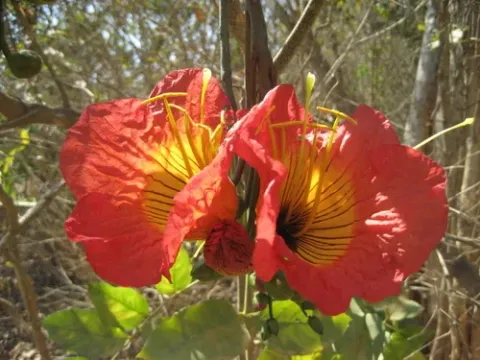
Fernandoa magnifica
Fernandoa magnifica
Fernandoa magnifica is an impressive tropical tree species belonging to the Bignoniaceae family. Originating from the humid regions of Africa, this plant is primarily recognized for its large, pinnate leaves and vibrant, tubular flowers that create a striking canopy effect.
What the section contains
Fernandoa magnifica
Botanically, the species is known for its sturdy trunk and wide-spreading branches, which adapt well to warm, frost-free environments. The tree relies on a specific balance of sunlight and humidity to reach its full potential, making it a prominent feature in its native forest habitats.
Cultivation requirements involve providing deep, fertile soils with excellent drainage properties. Fernandoa magnifica cannot tolerate waterlogged conditions, so it is essential to ensure that planting sites have adequate permeability to prevent root suffocation or decay.
The climate must be strictly tropical or sub-equatorial, with consistent temperatures ideally ranging between 22 and 30 degrees Celsius. The tree is highly sensitive to cold spells and winds, which can hinder growth and damage its foliage, necessitating sheltered planting locations.
Agrotechnical care consists of periodic pruning to maintain structural integrity and improve light penetration within the canopy. Mulching is highly recommended to conserve soil moisture, particularly during the dry season, ensuring the roots remain cool and hydrated.
In terms of economic and practical use, Fernandoa magnifica is primarily utilized in landscape architecture. Its rapid growth rate and dense foliage make it an excellent choice for city parks and public gardens in tropical climates where shade provision is critical.
The wood produced by the tree is generally of medium density and can be harvested for small-scale local carpentry or craft projects. However, the ornamental and ecological roles of the tree are considered far more significant than its timber potential in commercial agriculture.
Ecologically, the species serves as a valuable component in forest restoration projects. Its ability to thrive in diverse soil conditions within its range allows it to stabilize land and prevent soil erosion, contributing to the recovery of degraded ecosystems.
The plant acts as a vital source of nectar for various pollinators, which enhances the overall biological productivity of the landscape. This aspect is particularly important for biodiversity conservation in areas surrounding plantation or urban forest sites.
Overall profitability depends on the successful establishment of the saplings. Since the tree is long-lived and requires relatively low maintenance once matured, it serves as a cost-effective choice for long-term urban greening and sustainable forestry projects.
The primary threats to Fernandoa magnifica include fungal pathogens that typically attack the root system when drainage is compromised. Symptoms often include yellowing leaves and premature drop, necessitating the use of systemic fungicides or site drainage improvements.
Insects, particularly leaf-eating caterpillars and certain types of scale, can occasionally infest the foliage, impacting the plant's aesthetic quality. Regular inspection of the canopy is recommended to identify early-stage infestations and manage them effectively.
Nematodes are another concern in specific soil conditions, where they can weaken the tree's health by interfering with nutrient uptake. Incorporating organic matter into the soil is a proven technique to improve soil microbiology and help mitigate the impact of parasitic nematodes.
Environmental stress, such as mechanical damage from strong storms, poses a risk to the tree's physical form. Using support stakes for younger trees is a necessary precaution to protect the main trunk and branches during the early years of rapid growth.
Implementing an integrated pest management (IPM) program is the best approach to ensure the tree's health. By combining preventative agrotechnical practices with monitoring, growers can significantly reduce the need for aggressive chemical treatments.