
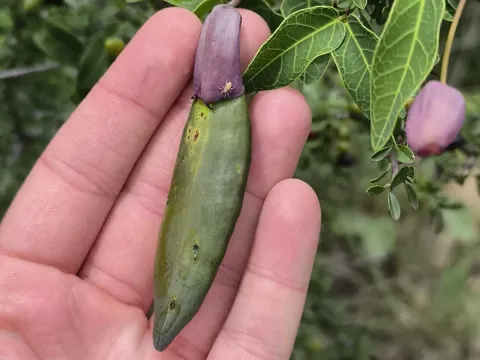
Dolichandra
Dolichandra
Dolichandra is a genus of perennial woody vines belonging to the Bignoniaceae family. The most widely recognized species is Dolichandra unguis-cati, famously known as the cat's claw creeper for its claw-like tendrils used to climb surfaces.
What the section contains

Dolichandra
Native to the tropical and subtropical regions of Central and South America, the plant thrives in warm, frost-free environments. In temperate climates, it is typically grown in greenhouses or as a decorative indoor plant due to its sensitivity to low temperatures.
For healthy growth, Dolichandra requires fertile, well-draining soil with a neutral or slightly acidic pH balance. The vine demands full sun exposure to bloom effectively, though young plants may benefit from partial shade during the hottest parts of the day.
Cultural practices involve moderate and consistent irrigation, ensuring the growing medium remains moist but not waterlogged. During the active growing season, application of a balanced fertilizer every two weeks supports vigorous development of its lush foliage.
Propagation is primarily achieved through stem cuttings or seeds. Cuttings should be placed in a loose, aerated substrate under high humidity conditions to facilitate rapid root development within several weeks.
Common pests affecting Dolichandra include spider mites, mealybugs, and aphids, especially when the plant is kept in dry, indoor environments. Frequent misting and proper air circulation are critical to keeping these populations in check.
Fungal issues, such as root rot and powdery mildew, often stem from improper drainage or excessive soil moisture. To prevent these infections, it is essential to monitor the moisture level of the root zone and ensure adequate spacing between plants.