
Garlic vine
Bignonia aequinoctialis
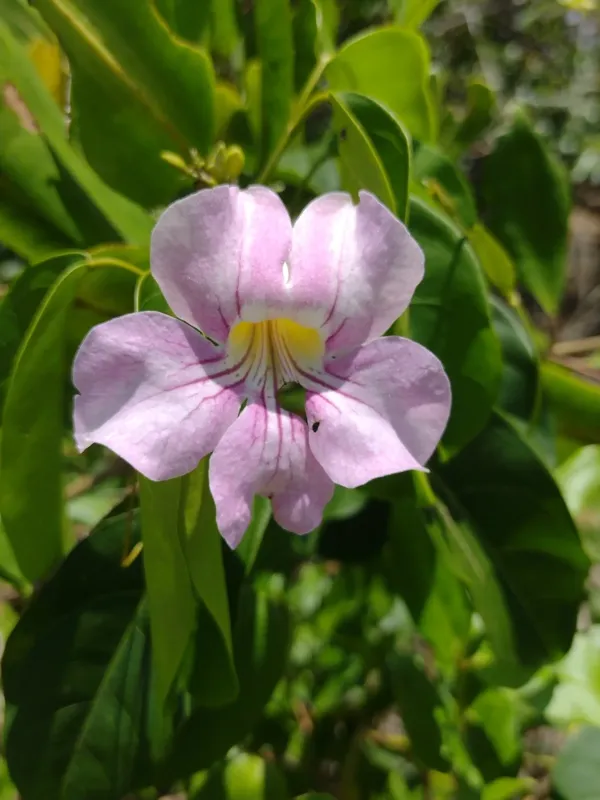
Description
Growing requirements
Garlic vine (Bignonia aequinoctialis), also known by its synonym Cydista aequinoctialis, is a vigorous evergreen climber belonging to the Bignoniaceae family. Its common name refers to the distinctive garlic scent released by its leaves when crushed.
Native to the tropical forests of the Americas, this species requires a warm, frost-free environment to thrive. It performs best in full sun or light shade, which encourages a dense habit and prolific flowering during the blooming season.
Soil requirements for Bignonia aequinoctialis include well-drained, fertile soil with moderate organic content. While it is adaptable to various soil types, maintaining a steady moisture level is essential for vigorous leaf and flower production.
Vertical support is a fundamental necessity for this cultivation. As a climbing plant, it utilizes tendrils to secure itself on trellises, fences, or pergolas, making it an excellent choice for ornamental vertical landscaping in tropical zones.
The plant demonstrates a high growth rate, necessitating regular maintenance pruning. This practice not only keeps the plant within desired bounds but also encourages new growth and improves the overall structural health of the vine.
Main diseases and pests
The Garlic vine is generally robust, but it can be susceptible to common greenhouse pests such as aphids, spider mites, and scale insects, especially when grown in protected environments with restricted airflow.
Fungal issues, particularly root rot, typically arise from poor drainage or overwatering. Maintaining a balanced irrigation schedule is the most effective preventative measure against soil-borne pathogens.
Leaf spot diseases may occasionally occur during periods of high humidity and cool temperatures. Removing infected foliage and improving ventilation around the canopy is essential to stop the spread of infection.
Scale insects can often be managed by manual removal or the application of horticultural oils, which are safer for the plant and the surrounding environment than strong chemical treatments.
Proper environmental monitoring and early detection of pest colonies remain the best strategy for managing threats, ensuring the long-term health and aesthetic appeal of the plant.