
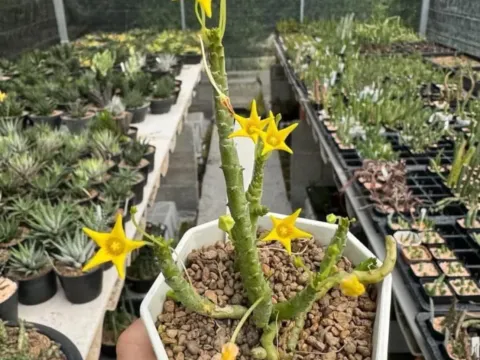
Socotrella
Socotrella
Socotrella is a genus of succulent plants belonging to the Apocynaceae family, native to the remote island of Socotra, which dictates its specific physiological requirements for survival in arid environments.
What the section contains

Socotrella
The plant is distinguished by its caudex, a swollen stem structure that acts as a water storage organ, allowing it to withstand prolonged periods of drought and extreme temperature fluctuations.
Successful cultivation requires a highly porous, inorganic substrate mix, typically composed of perlite, pumice, and coarse sand, to ensure optimal drainage and root aeration.
These plants have an extremely high demand for sunlight; they require bright, direct light throughout the growing season to maintain a compact growth habit and prevent etiolation.
The watering regime is the most critical aspect of the plant's agronomy: it should only be watered during the active growing season, and the substrate must dry out completely between waterings to prevent root rot.
Socotrella is susceptible to various pests, with mealybugs being the most common threat, often settling in the crevices of the stem where they are difficult to remove manually.
Spider mites can also be a significant issue in indoor cultivation environments with low humidity, causing fine webbing and discoloration of the succulent skin.
Fungal pathogens represent the most severe danger, primarily triggered by poor air circulation and excessive moisture retention in the growing medium, leading to base rot.
Integrated pest management involves the regular application of systematic insecticides and the physical removal of pests using alcohol-based solutions if the infestation is localized.
Preventing rot involves strict adherence to seasonal dormancy, keeping the plant dry during cooler months and ensuring the ambient temperature does not drop below safe thresholds.