
Stapelianthus
Stapelianthus
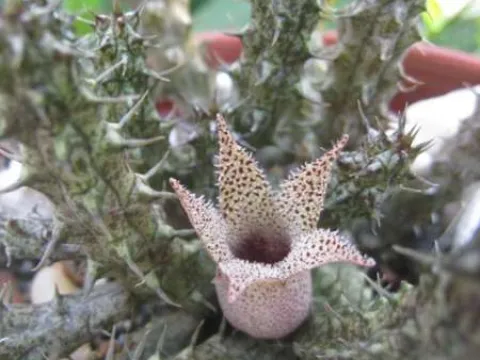
Stapelianthus is a genus of perennial succulent plants belonging to the Apocynaceae family. In their natural habitat, these plants are endemic to Madagascar, where they thrive in arid climates and rocky soil conditions.
What the section contains


Stapelianthus
Botanically, this crop consists of leafless stem succulents with ribbed shoots that form dense mats. A specific characteristic is their ability to store moisture in the stem tissues to survive in extreme, water-scarce environments.
The plant is highly demanding regarding light: for proper development and blooming, it requires bright but diffused light. Direct midday sun can cause burns, so eastern or western windows are the most suitable locations.
The temperature should be moderate in summer (20–25°C) and cool in winter (not below 12–15°C). During the dormant period, watering should be almost completely stopped to avoid root rot.
The soil for cultivation must be well-drained and loose. An ideal substrate is a mixture of turf soil, coarse sand, and fine gravel, with the addition of charcoal to improve drainage properties.
The primary threat to Stapelianthus is root and stem rot, which occurs due to waterlogged substrate or stagnant water in the drainage saucer.
Among pests, the mealybug is particularly dangerous, hiding in the folds of the ribs, along with the spider mite, which thrives in overly dry indoor air.
To control insects, regular inspection of the shoots is recommended, followed by the use of systemic insecticides upon the detection of parasite colonies.
Disease prevention consists of strictly controlled watering practices and the use of high-quality drainage material, which should occupy at least a quarter of the pot volume.
It is also crucial to maintain good air circulation in the room, as stagnant air contributes to the development of fungal infections on damaged stem sections.