
Rauvolfia verticillata
Rauvolfia verticillata
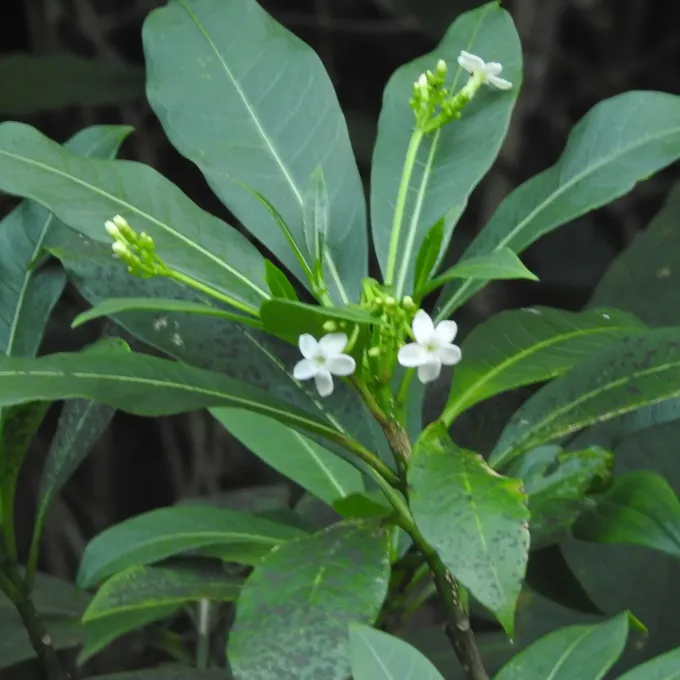
Description
Sowing dates
Rauvolfia verticillata is a perennial evergreen shrub belonging to the Apocynaceae family, primarily cultivated in tropical regions. Industrial propagation is typically conducted using seeds or vegetative cuttings in specialized nursery environments.
Seed germination requires careful stratification and consistent soil temperatures, which are critical for uniform seedling emergence. The optimal time for planting is the beginning of the rainy season, as high humidity promotes faster root establishment.
The plant demonstrates slow growth during its initial years, making mulching an essential practice for young plantations. Planting density is calculated based on specific cultivation objectives and the mechanization requirements of the farm.
Regular irrigation is vital during the growth phase, as the plant does not tolerate water deficiency in the root zone during the active vegetative period. Agronomic practices include consistent weeding, as young shrubs are sensitive to competition from invasive weeds.
The medicinal raw material, primarily the roots, is harvested after 3–4 years of growth when alkaloid concentration peaks. Root extraction requires careful handling to preserve soil structure and prevent damage to surrounding plants.
Growing requirements
Successful cultivation of Rauvolfia verticillata requires a hot, humid tropical climate with no frost exposure, as cold temperatures are detrimental. The optimal temperature for development is between 25 and 30 degrees Celsius with high relative humidity.
Soil requirements include well-drained, fertile loam with a near-neutral pH. Waterlogging and poor drainage in the root zone often result in root rot development and subsequent plant death.
The plant prefers areas with dappled sunlight or partial shade, particularly during the early stages of development. Direct, intense sunlight combined with low precipitation can cause leaf scorch and metabolic stress.
Adequate nutrient supply, particularly organic matter, is crucial for developing a robust root system. Balanced fertilization with essential micro-elements is recommended to support the synthesis of valuable secondary metabolites.
Agronomic management requires continuous monitoring of soil moisture, as water stress directly affects alkaloid accumulation. In commercial settings, drip irrigation is often utilized to ensure precise moisture delivery.
Yield
Yield for Rauvolfia verticillata is measured by the weight of dried roots, which serve as the primary source for pharmaceutical processing. Productivity depends on seedling quality, fertilization efficacy, and the age of the plantation at harvest.
Average yield per hectare varies significantly depending on the geographical region and the intensity of cultivation technologies. Proper nutrient management and pest control contribute to stable economic results over the multi-year growing cycle.
Economic use of the crop is focused on the extraction of unique alkaloids known for their antihypertensive and sedative properties. These attributes make the plant a highly valued asset for modern pharmaceutical industries.
Quality control involves laboratory analysis of active substances after root drying. The high market value of the refined product makes it an attractive crop for specialized agricultural enterprises.
Post-harvest storage requires strict temperature controls and protection from UV light to prevent the chemical degradation of the alkaloids. Proper primary processing ensures the longevity and bioactivity of the final product.
Main diseases and pests
Rauvolfia verticillata is susceptible to various pathogens, with fungal root infections being the most dangerous. Disease development is often triggered by excessive soil moisture and poor aeration in the root zone.
Pests such as aphids and spider mites can damage foliage, reducing photosynthetic capacity and overall plant vigor. Protective strategies include integrated pest management (IPM), utilizing both biological controls and systemic insecticides when necessary.
Nematodes pose a significant threat to the root system, causing gall formation and inhibiting nutrient uptake. Management practices include crop rotation and soil fumigation prior to establishing new plantations.
Foliar spots caused by pathogenic fungi can lead to significant reductions in vegetative mass. Regular field monitoring and the prompt removal of infected plant tissues are necessary to prevent the spread of infections.
Disease prevention is a cornerstone of effective agronomy, requiring optimal planting density and adequate air circulation. Using certified, healthy planting material significantly reduces the risk of large-scale infestations.