
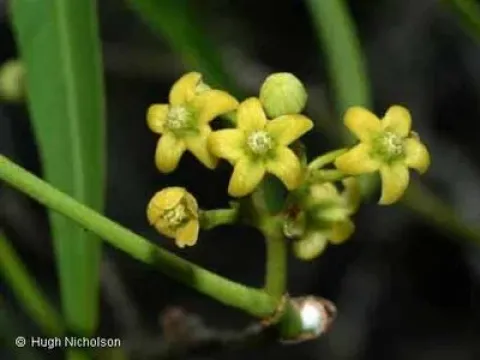
Secamone
Secamone
Secamone is a genus of woody lianas and subshrubs belonging to the Apocynaceae family. Native to the tropical and subtropical regions of Africa, Madagascar, Asia, and Australia, these plants are well-adapted to humid, warm environments.
What the section contains


Secamone
The cultivation of Secamone requires a stable, frost-free climate. In temperate regions, it must be grown in greenhouses where temperature and humidity can be precisely controlled throughout the year.
The plant thrives in well-draining, fertile soil with a neutral to slightly acidic pH. Proper drainage is essential, as the roots are highly susceptible to rot if left in waterlogged conditions.
Light management is crucial for the development of these lianas. They require bright, indirect sunlight; direct harsh sun can scorch the leaves, while insufficient light leads to spindly, weak growth.
Trellising is an essential part of the agricultural process. Providing sturdy supports allows the plant to climb effectively, ensures proper airflow through the canopy, and simplifies the harvesting of vegetative biomass.
The economic value of Secamone is largely rooted in its potential pharmacological applications. The plant contains various secondary metabolites, including steroidal glycosides, which have been studied for their medicinal properties.
Yield is measured by the amount of vegetative matter harvested for extraction. Consistent growth requires a balanced fertilization program and meticulous irrigation to support rapid biomass accumulation during the active growing season.
Propagation is most efficiently achieved through stem cuttings. This vegetative approach ensures uniformity among the plants, which is vital for maintaining the quality standards required in pharmaceutical raw materials.
Harvesting efficiency is improved when plants are grown on vertical systems. Controlled environments help in standardizing the chemical composition of the plant parts, which is a major factor in crop marketability.
Research continues into optimizing yields through specialized nutrient protocols and climate monitoring to maximize the concentration of specific active compounds within the foliage.
Common pests affecting Secamone include spider mites and mealybugs. These pests thrive in dry environments and can quickly damage the plant's delicate leaves and stems if not monitored regularly.
Fungal infections, particularly root rot, are significant threats caused by overwatering or poor ventilation. Maintaining a healthy soil structure and preventing standing water are the primary defense strategies.
Preventative measures involve regular monitoring, maintenance of optimal humidity levels, and good air circulation around the plants. Pruning also helps by removing weak or overcrowded branches that are prone to disease.
Biological control agents are preferred over chemical pesticides to maintain the purity of the medicinal product. Targeted applications are used only after a professional assessment of the pest population.
Soil-borne pathogens like nematodes can cause root damage, leading to reduced vigor. Using sterilized growth media and healthy planting stock is necessary to avoid infestation and ensure the longevity of the crop.