
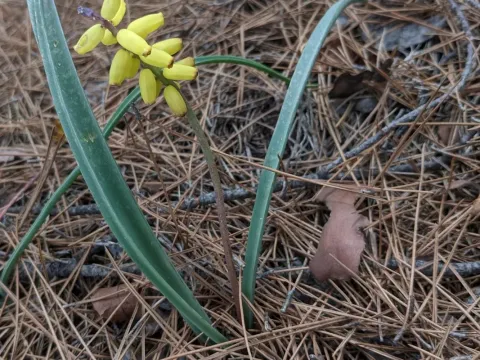
Grape hyacinth
Muscarimia
Planting of Muscari is performed in the autumn, typically from late August to early October, ensuring the bulbs establish roots before the ground freezes.
What the section contains


Grape hyacinth
For seed propagation, sowing is carried out in spring using nursery containers, although it should be noted that flowering only occurs after the third year.
Bulbs should be buried at a depth of 5–8 centimeters, with a spacing of approximately 10 centimeters between plants to ensure optimal nutrient intake.
Soil preparation involves incorporating well-rotted organic matter weeks before planting to enhance drainage and provide necessary fertility for spring growth.
Geographical timing varies; in colder regions, it is imperative to finish planting before the ground temperatures drop significantly to avoid frost heaving.
Muscari belongs to the Asparagaceae family and is recognized as a hardy, bulbous perennial that blooms early in the spring season.
These plants thrive in well-drained, fertile soils with a neutral pH, as standing water during winter months frequently leads to bulb decay.
Ideal planting sites are sunny or partially shaded areas where the soil warms up quickly, facilitating vigorous early growth of the foliage.
The culture is highly adaptable to various climatic zones, showing excellent cold tolerance and minimal requirements for supplemental irrigation during the spring.
Maintaining soil moisture during the active growth phase is critical, but the ground must be allowed to dry out significantly during the summer dormancy period.
Virus infections, particularly mosaic, are the primary concern for the crop, characterized by stunted growth and leaf mottling transmitted by aphid vectors.
Fungal issues, such as Penicillium rot, frequently arise in poorly drained soils, necessitating high-quality drainage systems to protect the root health.
Common pests include onion flies and spider mites, which can cause severe damage to the plant's vitality if left unmanaged during dry spring periods.
Integrated pest management, including regular inspection and the removal of symptomatic plants, is the most effective approach to maintaining crop health.
Applying preventative fungicides to the bulbs before planting is a recommended agronomic practice to mitigate risks of soil-borne pathogens.
Bulbs should be lifted only after the foliage has turned yellow and withered, indicating that energy reserves have successfully migrated back to the bulb.
After excavation, the material must be cleaned of debris and cured in a shaded, well-ventilated location to harden the outer scales before storage.
Storage conditions require a stable temperature of 17–20 degrees Celsius and low humidity to prevent fungal growth and premature sprouting of the bulbs.
Periodic division of bulb clumps every 3 to 5 years is necessary to prevent overcrowding, which otherwise leads to smaller blossoms and reduced crop vigor.
Storing bulbs in ventilated crates or mesh bags ensures adequate airflow, which is the key factor in long-term successful preservation of the planting material.