
Furcraea parmentieri
Furcraea parmentieri
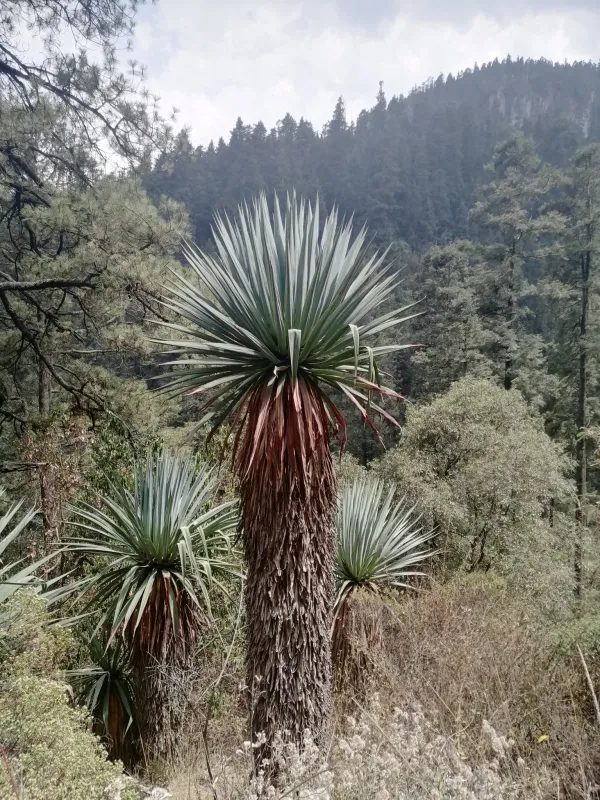
Description
Sowing dates
The propagation of Furcraea parmentieri is primarily conducted vegetatively. Adult plants produce a large number of bulbils on their inflorescences, which serve as the main planting material once they have reached sufficient maturity.
Planting is optimally scheduled for the beginning of the rainy season to allow the root system to establish itself thoroughly before the onset of the dry season.
For seed-based propagation, sowing is carried out in dedicated nurseries using a light, well-draining substrate to ensure consistent germination under stable, warm conditions.
Correct spacing is critical, as adult plants form large rosettes of thick leaves, and overcrowding can lead to poor plant development and increased humidity-related risks.
Seedlings are considered ready for permanent field transplantation after 6 to 8 months of growth, by which time they possess a robust enough root structure to thrive in open soil.
Growing requirements
Furcraea parmentieri belongs to the Asparagaceae family and is a succulent native to high-altitude tropical regions. It thrives best in well-draining, sandy or loamy soils with a neutral to slightly acidic pH level.
This crop is highly heliophilic and requires full exposure to sunlight. Sites with good air circulation are essential, while protection from severe, high-speed winds is recommended to prevent mechanical damage to the leaves.
The ideal temperature range for active growth is between +20°C and +30°C. Although it exhibits drought tolerance, it is susceptible to frost, which can cause significant damage to the fleshy tissues of the leaves.
In industrial settings, moderate irrigation during the growth phase significantly increases biomass production, although the plant is naturally adapted to survive extended dry periods.
Field maintenance involves consistent weeding to ensure the plants do not compete with grasses or shrubs for essential nutrients and moisture during their developmental years.
Yield
The primary economic focus for Furcraea parmentieri is the extraction of high-quality bast fiber. This fiber is highly regarded for its tensile strength and inherent resistance to saltwater degradation.
Yield capacity is largely determined by the plant's age and adherence to agricultural protocols. Mature, harvestable leaves are typically available 3 to 5 years after the initial plantation establishment.
The extraction process involves decortication, where the pulp is mechanically stripped from the fiber, followed by a thorough washing and solar drying stage to ensure fiber quality.
Beyond fiber production, the plant serves an important role in soil conservation, as its extensive root system prevents erosion on slopes and degraded lands in arid environments.
With correct harvesting cycles, a single plantation can remain productive for decades, making it a sustainable option for regional agricultural development.
Main diseases and pests
The most common threats to plantations are fungal infections, which thrive under conditions of high humidity or poor soil drainage, frequently resulting in root and stem rots.
Pest management is focused on controlling sucking insects such as mealybugs and scale insects, which can weaken the plants and degrade the overall fiber quality if left unchecked.
Prevention relies on strict moisture control and the immediate removal of any infected plant matter to prevent the rapid spread of pathogens throughout the fields.
Pesticide use should be minimized in favor of integrated pest management strategies, utilizing biological controls wherever possible to protect the ecosystem and yield purity.
Regular field scouting is essential to identify early symptoms of disease or pest outbreaks, allowing for targeted intervention before large areas of the plantation are affected.
Harvesting
Harvesting consists of selective cutting of the most mature leaves found at the base of the rosette, ensuring that only leaves with optimal fiber content are selected.
Prompt processing is crucial; harvested leaves must be transported and decorticated within 24 hours to prevent fermentation, which can rapidly deteriorate the fiber's strength and color.
Manual harvesting is the standard method due to the presence of sharp spines on the leaf margins, which complicates the use of large-scale mechanical harvesters in some areas.
Cyclical harvesting schedules are implemented to ensure a steady supply of raw material to processing facilities without causing undue stress or decline to the parent plants.
After fiber extraction, the residual plant pulp should be composted and returned to the soil, helping to maintain soil fertility and nutrient cycling across the plantation area.