
Golden agave
Agave aurea
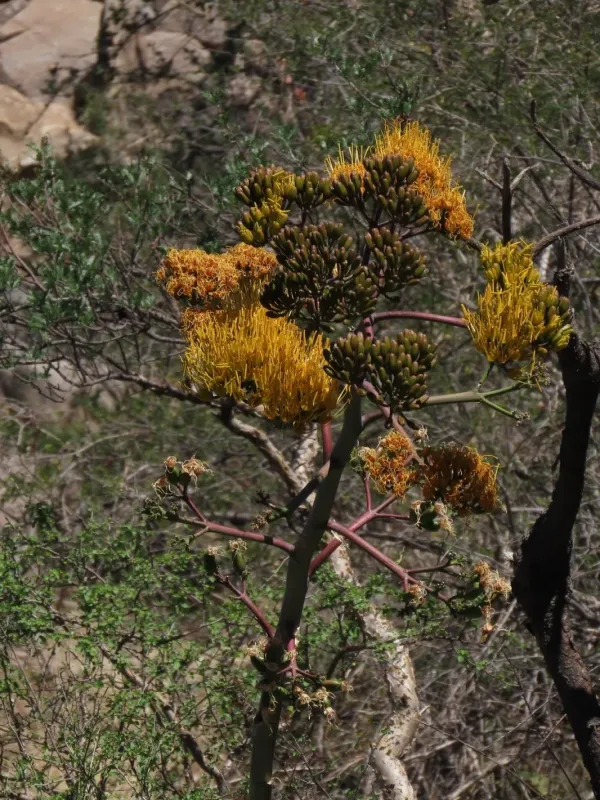
Description
Growing requirements
The Golden agave (Agave aurea) is a perennial succulent plant native to the Baja California peninsula in Mexico. It belongs to the Asparagaceae family and is well-adapted to surviving in arid, harsh environments characterized by rocky soils and intense sunlight exposure throughout the year.
Botanically, the plant is known for its impressive rosette of sword-shaped leaves, which often display a unique golden-green hue. Over many years of growth, Agave aurea develops a substantial woody trunk, distinguishing it visually from many other smaller rosette-forming succulent species.
Successful cultivation requires full sun exposure and gritty, well-draining soil. The primary rule in managing this crop is to ensure absolute drainage; the species is highly intolerant of waterlogged soil, which quickly leads to root rot and eventual death of the specimen in most cases.
Climate requirements for this species are centered on warm temperatures and low humidity. It thrives in regions where dry conditions prevail, as excess moisture in the air combined with soil water can encourage fungal pathogens. It is a slow-growing plant that requires minimal intervention once established.
The plant is primarily used for ornamental purposes and xeriscaping, providing a sculptural element to landscapes. Its resilience to drought makes it an ideal candidate for water-wise garden designs in arid climates, where it can remain green and vibrant with very little supplemental irrigation.
Main diseases and pests
Root and crown rot are the most common issues affecting this agave, usually triggered by improper watering practices or heavy, clay-based soil substrates. Maintaining a dry zone around the base of the plant is critical to prevent such issues from occurring during the growth cycle.
Agave snout weevils are the most significant pest threat, capable of destroying the plant from the inside out. Other potential pests include mealybugs and spider mites, particularly when the plants are grown in confined or poorly ventilated conditions, such as greenhouses or enclosed containers.