
Furcraea tuberosa
Furcraea tuberosa
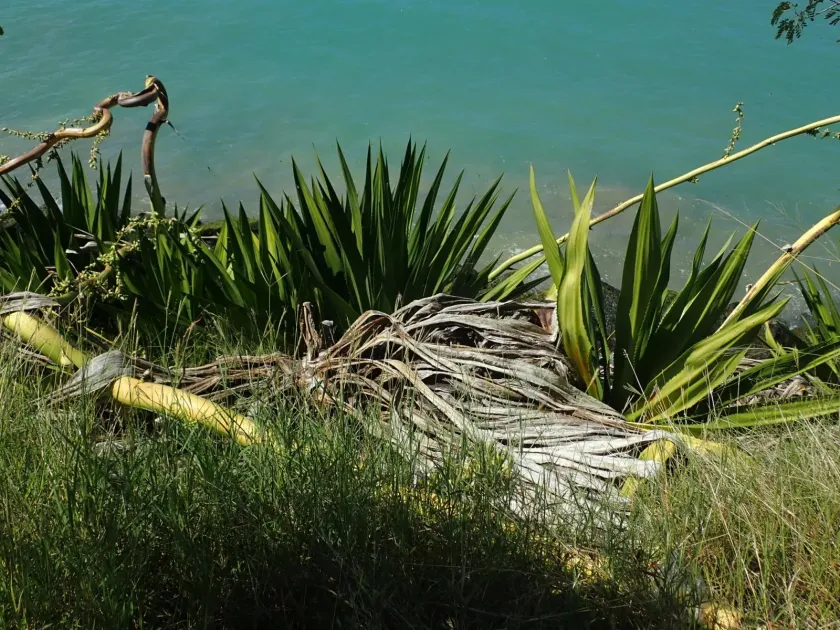
Description
Sowing dates
Furcraea tuberosa belongs to the Asparagaceae family, specifically the Agavoideae subfamily. This succulent perennial is native to the tropical regions of the Caribbean and South America, where it has historically been utilized for its fiber properties.
In commercial cultivation, the plant is primarily propagated vegetatively. The floral stalks produce numerous bulbils, which act as small plantlets. Once they mature and fall, they root easily, providing a sustainable method for establishing new plantations.
Planting typically commences at the onset of the rainy season. This timing ensures sufficient soil moisture for the rapid establishment of the root system, which is critical for the plant's survival during the initial growth phases.
The spacing between plants should be carefully managed, ideally maintaining an interval of 2 to 3 meters. This allows for optimal leaf development and provides the necessary space for agricultural workers to navigate the rows during the harvest.
The crop is highly adaptable to various soil types, provided they offer excellent drainage. No intensive seedbed preparation is required, though the site must be thoroughly cleared of competing weeds to ensure unimpeded development.
Growing requirements
Furcraea thrives in a tropical climate characterized by a distinct wet and dry season. It performs best under temperatures ranging from +22 to +30 degrees Celsius, requiring a stable and significant amount of daily sunlight.
The plant is highly sensitive to waterlogged conditions, which can quickly lead to root rot. Therefore, it is essential to cultivate it on well-drained soils, such as sandy loams or on gentle slopes that prevent the accumulation of stagnant water.
It demonstrates remarkable drought tolerance, storing moisture in its thick, fleshy leaves. While it can survive long dry spells, moderate irrigation during the active growth period significantly enhances the biomass yield.
The soil should ideally be neutral or slightly acidic. While it can tolerate nutrient-poor soils, applying organic matter during the establishment phase can accelerate initial growth, though excessive fertilization is generally unnecessary.
Furcraea is strictly a frost-intolerant plant. Exposure to freezing temperatures can cause irreversible damage to the cellular structure of the leaves, limiting its commercial cultivation to tropical and subtropical zones.
Yield
The economic value of Furcraea tuberosa lies in its high-quality vegetable fiber, extracted from the leaves. Mature leaves can grow up to 2 meters in length, providing a consistent and abundant supply of raw fiber for industrial use.
Harvesting usually begins when the plant reaches maturity, typically around 3 to 4 years after planting. The yield per hectare is heavily dependent on the plant density and the local environmental conditions during the growth cycle.
Leaves are harvested by cutting them from the outer part of the rosette, ensuring the growing point remains undamaged. This allows for a continuous harvest cycle, with plants producing new leaves over several years.
The resulting fiber is celebrated for its exceptional tensile strength and resistance to saltwater degradation. These characteristics make it a preferred material for marine ropes, cordage, and various types of durable packaging.
Byproducts of the fiber extraction process, consisting of leaf pulp, can be processed into organic fertilizer or compost, which is then returned to the plantation to support ongoing soil fertility.
Main diseases and pests
Fungal diseases are the primary threat to the crop, particularly in environments with poor drainage or excessive humidity. These pathogens primarily attack the root and base, often causing systemic wilting.
Insect pests, including certain species of weevils and lepidopteran larvae, can cause significant damage by feeding on the soft tissue of the leaves, which reduces both the quantity and the quality of the harvestable fiber.
Effective management involves regular plantation surveillance and the immediate removal of infected or damaged plant material. This sanitation practice is crucial to prevent the spread of localized outbreaks.
Chemical intervention is rarely required and should be avoided where possible to maintain the ecological balance of the plantation. Strict adherence to proper drainage and spacing is usually sufficient to mitigate most risks.
- Maintain optimal soil drainage.
- Implement regular sanitation of the fields.
- Monitor plant density to ensure air circulation.
- Clear surrounding areas of invasive weed species.
Harvesting
Harvesting Furcraea is performed through a sustainable, rotational method. Once the plant reaches maturity, only the fully developed leaves from the lower tiers are harvested, allowing the central rosette to continue growing.
The extracted leaves undergo decortication, a mechanical process where the leaf pulp is removed to expose the long, clean fibers. This is typically done using standardized machinery to ensure efficiency and uniformity.
Following extraction, the raw fibers are thoroughly washed in clean water. This step is vital to remove plant sap, which may contain compounds that could irritate the skin during manual handling or affect the color of the final product.
After washing, the fibers are spread out in the sun to dry. Consistent solar drying is essential to prevent mold growth and ensure the fiber maintains its natural color and structural integrity.
Finally, the dried fiber is graded by length and quality, bundled into secure bales, and transported to manufacturing facilities for conversion into textiles, industrial ropes, or specialty paper products.