
Giant yucca
Yucca gigantea
Description
Growing requirements
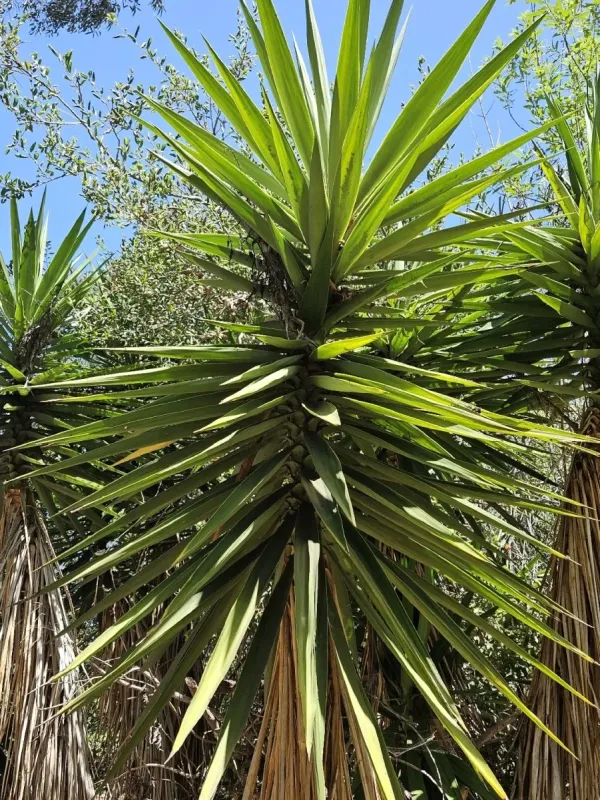
Giant yucca (Yucca gigantea), belonging to the Asparagaceae family, is a robust, arborescent plant capable of reaching significant heights. It is widely recognized for its strong, woody stems and architectural foliage, making it a prominent feature in its native habitats.
The plant originates from Central America, thriving in tropical and subtropical environments. It prefers well-drained, sandy or loamy soils that prevent water saturation, as the roots are highly susceptible to rot in heavy, compacted earth.
Botanically, it is characterized by stiff, lanceolate leaves arranged in dense rosettes. These leaves have a thick cuticle, which acts as a protective barrier against extreme heat and helps the plant maintain internal moisture levels during dry spells.
Climate requirements for optimal growth involve plenty of sunlight and mild temperatures. While it can withstand occasional heatwaves, it is sensitive to prolonged hard frosts, which can damage the cellular structure and stem tissues of the plant.
Agronomic management requires balanced irrigation cycles, allowing the soil to dry out significantly between waterings. Fertilization should be moderate, focusing on potassium to maintain the structural integrity of the leaves and stems.
Main diseases and pests
Root rot is the most serious threat to the giant yucca, usually triggered by poor drainage or overwatering. Once the root system begins to decay, the infection often spreads to the main stem, which can be irreversible for the plant's health.
Spider mites are a common pest in arid conditions, especially during the growth phase. These microscopic insects feed on the underside of leaves, causing discoloration and eventual decline in the photosynthetic capacity of the entire plant.
Scale insects present a hidden challenge, as they anchor themselves onto the leaf bases and stems. Their presence causes localized yellowing and stunts the overall growth of the plant, often leading to secondary fungal issues due to honeydew production.
Leaf spot fungi, particularly those causing necrotic patches, thrive in humid, poorly ventilated areas. Maintaining adequate spacing between plants is essential to allow for airflow and to reduce the incidence of moisture-related infections.
Bacterial soft rot can destroy the central growing point of the yucca. To minimize this risk, growers must practice strict sanitation, ensure that no water is trapped in the leaf crowns, and avoid mechanical damage that could serve as entry points for pathogens.