
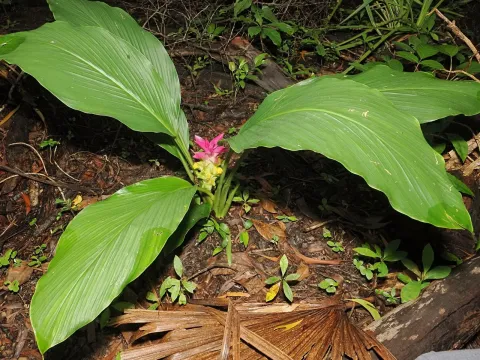
Turmeric
Curcuma L.
Turmeric (Curcuma L.) belongs to the ginger family and is a perennial herbaceous plant with a robust rhizome. In commercial agriculture, propagation is carried out vegetatively by dividing the rhizomes, as sexual seed propagation is rarely utilized in commercial cultivation.
What the section contains
 Blue ginger
Curcuma aeruginosa Rosc.
Blue ginger
Curcuma aeruginosa Rosc.
 Curcuma alismatifolia
 Gagnep.
Curcuma Maejo
Curcuma alismatifolia x aurantiaca Maejo
Curcuma alismatifolia
Curcuma alismatifolia Gagnep.
Curcuma Maejo
Curcuma alismatifolia x aurantiaca Maejo
 Curcuma singularis
 Gagnep
Curcuma singularis
Curcuma singularis Gagnep
 Hybrid turmeric
Curcuma hybr.
Hybrid turmeric
Curcuma hybr.
 Mango ginger
Curcuma amada Roxb.
Mango ginger
Curcuma amada Roxb.
 Orange ginger
Curcuma aurantiaca Zijp
Orange ginger
Curcuma aurantiaca Zijp
 Turmeric
Curcuma longa L.
Turmeric
Curcuma longa L.
Turmeric
Planting is performed in warmed soil at the beginning of the rainy season, which provides an optimal start for developing vegetative mass and establishing the root system. Soil temperature should be at least 20–25 degrees Celsius for successful emergence.
The optimal planting pattern involves row spacing of 45 to 60 centimeters with a distance of 25–30 centimeters between plants within the row. This provides sufficient space for the formation of high-quality commercial rhizomes.
Healthy rhizome fragments weighing 20–30 grams, containing at least two to three growth buds, are selected for planting. The planting depth is usually 5–10 centimeters, depending on soil type and water availability in the area.
The full development cycle of the crop from planting to harvest readiness takes from 7 to 9 months. Throughout this period, the plant goes through stages of intensive leaf growth and subsequent biomass accumulation in the rhizome.
Turmeric is a tropical plant and is therefore critically demanding regarding heat and humidity levels. The optimal temperature range for vegetation is 20 to 35 degrees Celsius, combined with consistently high air humidity.
Turmeric prefers fertile, well-drained loamy or sandy soils rich in organic matter. Waterlogging is detrimental to the rhizomes, as it triggers rapid rot development and bacterial infections.
The soil pH should be in the slightly acidic to neutral range, between 5.0 and 7.5. In waterlogged areas, plants should be grown on raised beds or ridges to improve aeration and facilitate excess water drainage.
The crop requires regular application of organic fertilizers, such as compost or well-rotted manure, before the planting season begins. Balanced mineral complexes rich in potassium are also highly effective for yield improvement.
Lighting is crucial; while the plant tolerates partial shade, turmeric requires intense sunlight for maximum yield, though it may need protection from direct midday sun in extremely hot regions.
Turmeric yield depends on the variety, quality of planting material, and adherence to agronomic practices. On average, one hectare can produce 10 to 25 tons of raw rhizome depending on regional climatic conditions.
When utilizing high-yielding hybrids and intensive cultivation technologies, yields can reach up to 30 tons per hectare. Planting density and timely fertilization during the active growth phase are critical factors for productivity.
After harvesting, the crop undergoes primary processing: washing, boiling in hot water to set the color, drying, and final cleaning. Mass loss during drying is approximately 70–80 percent of the original raw weight.
The economic efficiency of the crop is determined by its curcumin and essential oil content, which depend on the soil and climatic characteristics of the cultivation site. High-quality products command higher market prices for the final dry powder.
Regular crop rotation helps maintain stable yields by preventing soil exhaustion and the accumulation of specific soil-borne pathogens in the cultivation zone.
Root rots caused by fungal infections such as Pythium and Fusarium pose the greatest threat to the crop. These pathogens develop actively under conditions of excessive moisture and poor soil drainage.
Common pests include root mealybugs and nematodes, which damage the root system and hinder the absorption of nutrients. Severe infestations cause leaves to yellow and the plant to wilt prematurely.
Leaf-feeding pests, such as leaf rollers and caterpillars, can cause damage during the active vegetative growth period. The application of preventive insecticides at early stages significantly reduces the risk of crop loss.
- Regular inspection of plantings for signs of leaf spots.
- Use of healthy, virus-free planting material.
- Timely weeding to eliminate host plants for pathogens.
- Implementation of quality drainage systems to prevent water stagnation.
- Use of fungicidal treatments before storing or planting rhizomes.
Adherence to quarantine measures and the selection of varieties resistant to local disease strains are key protection strategies that minimize the need for chemical control agents.
Harvesting begins when the lower leaves of the plant start to yellow and gradually dry out. This is a reliable indicator that the nutrient accumulation process in the rhizome has concluded and it has reached maximum maturity.
Rhizomes are carefully dug up by hand or using specialized mechanized equipment, taking care not to damage the skin. Mechanical damage provides entry points for infections and reduces the shelf life of the final product.
After extraction, the rhizomes are cleaned of soil, stem residues, and fine roots. To facilitate cleaning, the rhizomes are often rinsed in running water before further processing.
The harvested crop must undergo mandatory thermal treatment—typically boiling in water for 45–60 minutes. This procedure is essential for uniform pigment distribution and the destruction of enzymes that cause spoilage.
The final stage is drying under the sun or in drying chambers until the required moisture level (about 10 percent) is achieved. The dried raw material is then stored in cool, dry, and well-ventilated rooms.