
Turmeric
Curcuma longa L.
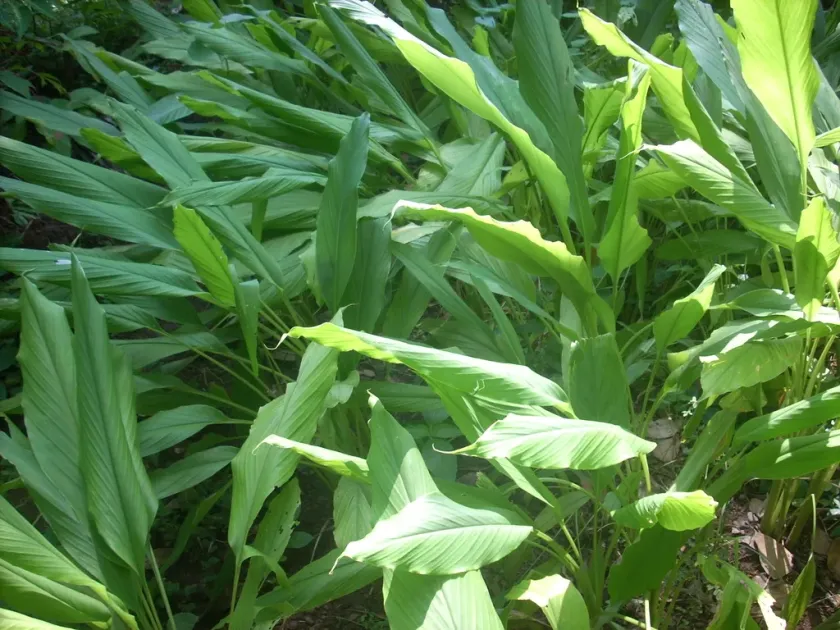
Description
Sowing dates
Turmeric is a perennial herbaceous plant belonging to the Zingiberaceae family. In agricultural practice, it is propagated vegetatively using rhizome cuttings, as it rarely produces viable seeds in cultivation.
Planting is conducted in well-prepared, warm soil at the beginning of the rainy season or in controlled greenhouse environments with temperatures consistently above 20°C. Rhizome sections with active buds are planted 5–10 cm deep, spaced 30–45 cm apart.
The selection of high-quality planting material is critical for success; rhizomes must be disease-free, plump, and feature healthy nodes for robust sprouting.
The growing cycle of turmeric is lengthy, typically lasting 7 to 9 months depending on the specific cultivar and environmental conditions of the region.
Ensuring adequate space between plants is essential to provide enough nutrient access and to facilitate the development of the secondary rhizomes that constitute the primary harvest.
Growing requirements
Turmeric thrives in tropical climates and requires high temperatures, ideally between 20°C and 30°C, combined with consistent moisture throughout its growth cycle.
Water management is vital: while the crop requires regular irrigation, excessive water stagnation leads to rapid rhizome rot, meaning excellent soil drainage is non-negotiable.
The preferred soil type is a deep, fertile, loamy or sandy-loam texture with an acidic to neutral pH (5.5–6.5), which allows for easy expansion of the root system.
Although turmeric prefers bright light, intense midday sun in hot climates can scorch the leaves; thus, partial shading is often employed by farmers to maintain plant vigor.
As a nutrient-demanding crop, organic matter such as compost or manure is typically incorporated into the soil prior to planting to ensure steady growth and high-quality rhizome formation.
Yield
The yield of turmeric varies significantly based on soil fertility, cultivar selection, and the intensity of agricultural management practices implemented during the season.
Commercial plantations can achieve yields ranging from 10 to 20 metric tons of fresh rhizomes per hectare under optimal conditions and proper fertilization schedules.
Focusing on balanced nitrogen, phosphorus, and potassium applications helps maximize both the total biomass and the concentration of curcumin, the primary bioactive compound.
Market value is often determined by the quality of the processed product, so post-harvest processing efficiency plays a major role in the overall economic viability of the farm.
Strategic crop rotation with non-host species is recommended to prevent soil exhaustion and to maintain soil health for subsequent planting cycles.
Main diseases and pests
Rhizome rot, caused by various soil-borne fungi, represents the most significant threat to turmeric production, particularly in fields with poor drainage or over-irrigation.
Leaf blotch and leaf spot diseases caused by Colletotrichum species can severely diminish the photosynthetic capacity of the plant, leading to stunted rhizome development.
Pests like root-knot nematodes and scale insects directly target the underground or lower portions of the plant, often leading to substantial losses in market-grade yield.
Effective management involves preventive measures such as treating rhizomes with fungicides before planting and ensuring strict field sanitation to remove infected debris.
Integrated pest management strategies help balance crop protection with environmental health, ensuring long-term sustainability of the farming enterprise.
Harvesting
Harvesting begins when the aerial parts of the plant, specifically the leaves and stems, start to turn yellow and dry out, indicating that the rhizomes have reached maturity.
Rhizomes are carefully lifted from the soil to avoid mechanical damage; even minor cuts or abrasions can lead to post-harvest infection and rapid quality degradation during storage.
Once harvested, the roots are cleaned of adhering soil, washed thoroughly, and sorted by size or quality before undergoing processing or being sold as fresh produce.
The processing of dried turmeric usually involves boiling or steaming the rhizomes, followed by drying them in the sun or through industrial thermal processes until they are hard.
The final product is then ground into a fine, vibrant yellow powder, which serves as a cornerstone ingredient in the global food, medical, and cosmetic industries.