
Curcuma alismatifolia
Curcuma alismatifolia Gagnep.
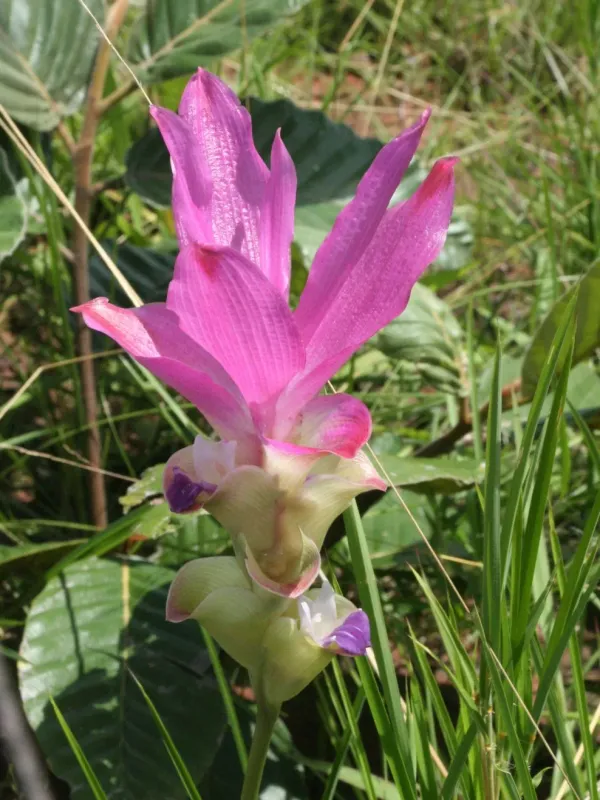
Description
Sowing dates
Curcuma alismatifolia, commonly known as Siam tulip, is a perennial herbaceous crop belonging to the Zingiberaceae family. In commercial horticulture, this plant is primarily propagated through the division of rhizomes to maintain variety characteristics.
Rhizomes are planted during the spring season when soil temperatures reach 20–25°C. A spring start in March or April is optimal, as it provides the plant with sufficient photoperiod and warmth to establish a robust foliage rosette before the peak of summer.
Pre-planting treatment of rhizomes with systemic fungicides is a standard agricultural practice to prevent rot during the sensitive initial growth phase. Rhizomes should be planted at a depth of 3–5 cm in a porous, well-draining medium to prevent water stagnation.
For commercial greenhouse production, maintaining a spacing of at least 25–30 cm between plants is essential. This spacing ensures proper air circulation, which is critical to minimizing the incidence of foliage diseases in high-humidity environments.
Once the flowering period concludes, the plant enters a natural dormant phase. During this time, irrigation should be gradually reduced to allow the foliage to wither and the rhizome to enter its resting period before the next growth cycle.
Growing requirements
The crop requires conditions mimicking its native tropical habitat. An ideal temperature range for active growth is 22–28°C; temperatures consistently dropping below 15°C will significantly inhibit metabolic processes and plant development.
Curcuma alismatifolia thrives in lightweight, highly aerated, and well-draining soil with a pH ranging from 5.5 to 6.5. Standard commercial peat-based substrates supplemented with perlite are highly effective for rhizome development.
High relative humidity (60–80%) is a fundamental requirement for the success of this crop. Low humidity levels often result in leaf tip burn, stunted floral spikes, and overall decline in the market value of the cut flower product.
Bright, filtered light is essential for optimal growth. Exposure to intense, direct midday sunlight can lead to leaf scorching, necessitating the use of greenhouse shade cloths with an intensity reduction of approximately 30–40%.
Regular fertilization with balanced NPK fertilizers, with an emphasis on potassium and phosphorus during the vegetative stage, ensures the production of large, vibrant bracts. Nutrient application should be scheduled every 14 days during the active growing season.
Main diseases and pests
Root rot caused by Pythium and Rhizoctonia species is the most significant threat to the crop. These pathogens proliferate rapidly in waterlogged soil, making strict adherence to irrigation protocols and the use of high-quality drainage systems mandatory.
Spider mites are a major pest challenge, particularly in environments with suboptimal humidity. These pests feed on sap, causing chlorosis, stippling, and eventual necrosis of the leaves if left uncontrolled.
Mealybugs can also infest the plant, residing in the leaf axils and stems. Integrated pest management (IPM) strategies, including the use of systemic insecticides or biological controls, are recommended for maintaining a healthy greenhouse population.
Bacterial leaf spot can occur when airflow is restricted and humidity is excessive. Affected foliage should be removed immediately, and preventative applications of copper-based bactericides can assist in protecting the remaining crop.
Effective crop sanitation, including the sterilization of tools and monitoring of incoming planting stock, is vital to prevent the introduction and spread of pathogens within the production facility.