
Bamboo orchid
Arundina graminifolia
Description
Growing requirements
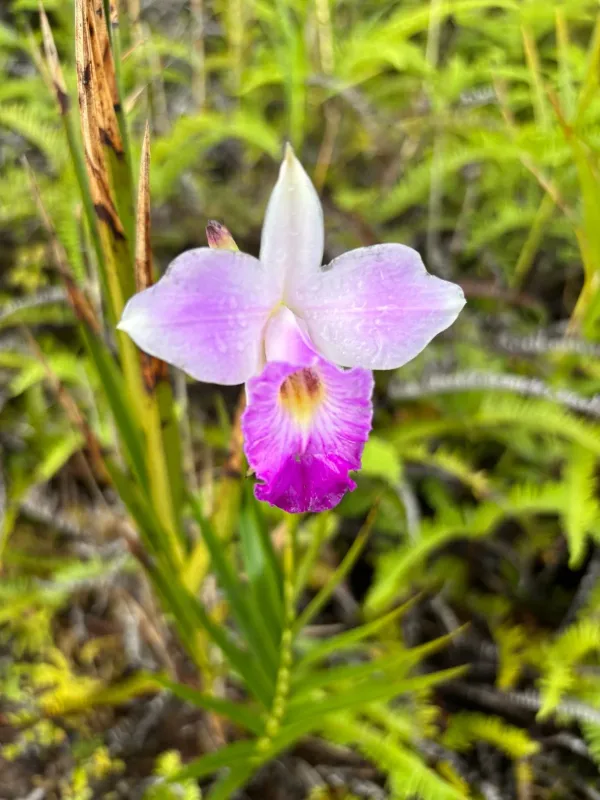
Arundina graminifolia, commonly known as the bamboo orchid, is a striking member of the Orchidaceae family. It is distinct for its reed-like stems and narrow, grass-like leaves, which create a structural appearance similar to bamboo.
Native to tropical and subtropical regions of Asia, including India, Southeast Asia, and China, the plant thrives in diverse environments, from sunny open slopes to roadside embankments.
Successful cultivation requires high light intensity, ideally partial to full sun. While it is a tropical plant, it demonstrates significant adaptability to various soil types, provided they remain acidic and well-drained.
The plant requires constant moisture during its growth cycle but cannot tolerate waterlogged conditions. High humidity and stable temperatures between 20°C and 30°C are essential for consistent flower production.
Economically, it is cultivated primarily for its high ornamental value in tropical landscapes and as a cut flower in commercial floriculture due to the durability of its blossoms.
Main diseases and pests
The most common pests affecting the bamboo orchid are spider mites and mealybugs, which tend to accumulate on the underside of the foliage in dry air conditions.
Root rot caused by Rhizoctonia or Pythium fungi is a frequent threat when the potting medium becomes too compact and lacks proper aeration.
Bacterial soft rot can occur if water remains trapped in the leaf axils or at the base of the stems, leading to tissue decay that spreads rapidly under high humidity.
Proper sanitation in the greenhouse is vital to prevent the spread of pathogens, including the regular disinfection of cutting tools between plants.
Integrated pest management, including regular monitoring and the use of targeted biological or chemical controls, is recommended for maintaining healthy crop stands.