
Dragon's mouth orchid
Arethusa bulbosa
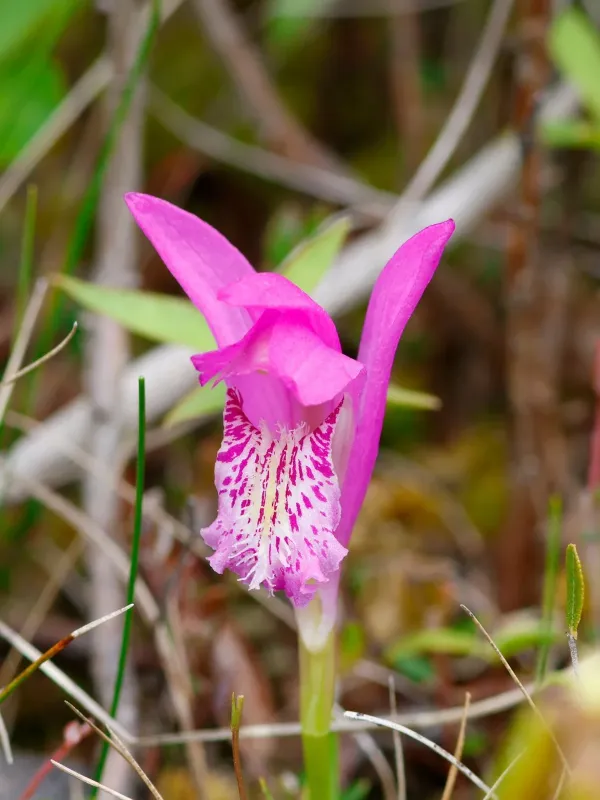
Description
Growing requirements
The Dragon's mouth orchid (Arethusa bulbosa) is a perennial terrestrial plant belonging to the Orchidaceae family. It is native to the northern parts of North America, where it thrives in specialized acid-bog environments.
Botanically, it is identified by a small corm that produces a single grass-like leaf and a solitary, striking magenta-pink flower. The plant relies on a specialized symbiosis with soil fungi, which is vital for its nutrient uptake.
For successful cultivation, growers must provide a highly acidic, peat-based substrate that remains consistently moist. Ensuring adequate drainage is crucial, as the plant cannot tolerate stagnant water around its roots.
The climate requirements include a cool growing season followed by a dormant winter period, where temperatures must drop to simulate natural cycles. Exposure to extreme heat or drying winds is detrimental to the plant's survival.
Due to its high sensitivity, this orchid is rarely used in commercial agriculture. Its primary application is within botanical conservation and specialized horticultural collections, where micro-climates can be precisely controlled.
Main diseases and pests
Fungal pathogens represent the most significant threat to the Dragon's mouth orchid. If the substrate aeration is insufficient, the corm becomes highly susceptible to rapid decay, often leading to total loss of the specimen.
Insect pests such as spider mites and aphids are known to feed on the foliage, especially in greenhouse environments with low humidity. Integrated pest management should prioritize manual removal and mild biological controls.
The loss of specific mycorrhizal fungi in the soil medium acts as a limiting factor. If the symbiotic relationship is disrupted, the orchid ceases to thrive and eventually declines, regardless of other conditions.
Soil salinity is another hazard, as these plants are evolved to survive in low-nutrient, acidic bogs. The use of standard chemical fertilizers is generally toxic to this species and should be strictly avoided.
Overcrowding by invasive bog vegetation can also suppress the growth of Arethusa bulbosa by competing for space and light. Regular weeding is necessary in managed cultivation sites to maintain plant vigor.