
Tigridia pavonia
Tigridia pavonia (L. f.) Redouté
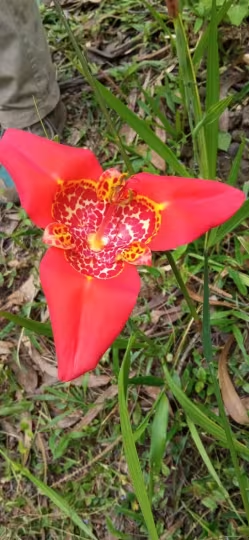
Description
Sowing dates
Planting of Tigridia pavonia bulbs into the open ground should be performed in spring, once the threat of frost has completely passed and the soil has warmed.
In regions with cooler climates, it is advised to start the bulbs in containers indoors several weeks before the last expected frost to ensure early flowering.
Bulbs are typically planted at a depth of 8 to 10 centimeters, maintaining a spacing of 15 to 20 centimeters between individual plants for healthy development.
Prior to planting, it is highly recommended to treat the bulbs with a fungicide to prevent soil-borne pathogens from attacking the delicate root system.
The chosen site must receive full sunlight throughout the day and be well-sheltered from strong winds to protect the fragile stems and elaborate flowers.
Growing requirements
Tigridia pavonia is a member of the Iridaceae family, naturally occurring in the mountainous regions of Mexico and parts of Central America.
The crop requires fertile, light, and well-drained soil; poor drainage or waterlogged conditions are fatal, leading to the rapid decay of the bulbs.
Consistent moisture is needed during the growth cycle, but the soil should never become sodden, especially during the active budding and blooming phases.
As a heat-loving plant, it thrives in warm temperatures and requires full sun exposure to trigger its unique, short-lived but spectacular flowering mechanism.
Supplementary fertilization with a balanced mix during the active vegetation stage supports vigorous growth and the production of healthy daughter bulbs for future seasons.
Main diseases and pests
Common pests affecting Tigridia include wireworms and mole crickets, which can cause significant damage by feeding on the bulb tissues from underground.
Fungal rots, specifically Fusarium or Rhizoctonia, are primary disease threats, particularly when the crop is grown in heavy or poorly draining soils.
Effective pest management involves using targeted soil insecticides and ensuring that the planting site has been properly prepared and sanitized.
Monitoring for aphids and spider mites during hot, dry periods is essential, as these can transmit viral diseases that weaken the plant's overall health.
Sanitation practices, such as removing infected plant debris immediately, are critical to preventing the spread of diseases within the planting area.
Harvesting
Bulb harvesting is performed in the autumn, ideally after the first yellowing of foliage but before the ground begins to freeze in late fall.
Using a garden fork, bulbs should be lifted carefully to avoid mechanical injury to the outer layers, which can create entry points for pathogens.
Post-harvest care involves cleaning the bulbs and allowing them to dry in a cool, shaded, and well-ventilated space for at least two weeks before storage.
For storage, bulbs should be kept in a cool environment (3–5 degrees Celsius) in a dry medium like peat moss or sand to prevent dehydration over the winter.
Regular inspection of the stored bulbs is recommended to remove any instances of rot, ensuring that the stock remains healthy for the next planting season.